 ultimate-guide
How Should You Plan Your Residential Stone Work in 2026?
Last Updated: October 25, 2026
Quick Summary
Residential stone work design combines aesthetic vision with structural durability to transform outdoor spaces into lasting focal points. The best designs start with understanding your material options and how they perform in your specific environment, matching stone choice to functional demands like retaining walls, patios, or fire pits.
- Residential construction accounts for 35.1% of the U.S. masonry industry's revenue as of 2026, down from 40.5% in 2022.
- Large-format stone, natural neutrals, and mixed-material expressions are the three dominant design trends shaping residential stone work in 2026.
- Outdoor stone fire pit installations typically cost $8,000-$20,000 for brick-based designs, scaling to $45,000-$100,000 or more for custom natural stone masonry.
- Retaining walls require proper drainage with gravel backfill and perforated drain pipe to prevent water pressure and structural failure.
- Seal porous stones like limestone and travertine every 2-3 years, and inspect mortar joints annually for deterioration.
Table of Contents
- Understanding Residential Stone Work Design for 2026
- Natural Stone vs. Manufactured Stone Veneer: Which Is Right for Your Project?
- Stone Material Types and Their Best Uses
- Design Trends Shaping Residential Stone Work in 2026
- Creating Outdoor Stone Fire Pit Design and Living Spaces
- Building Durable Stone Retaining Wall Design
- Stonework Maintenance and Long-Term Care
- Planning Your Stone Work Project: Next Steps
- Frequently Asked Questions
Understanding Residential Stone Work Design for 2026
Residential stone work design combines aesthetic vision with structural durability to transform outdoor spaces into lasting focal points. The best designs start with understanding your material options and how they perform in your specific environment.
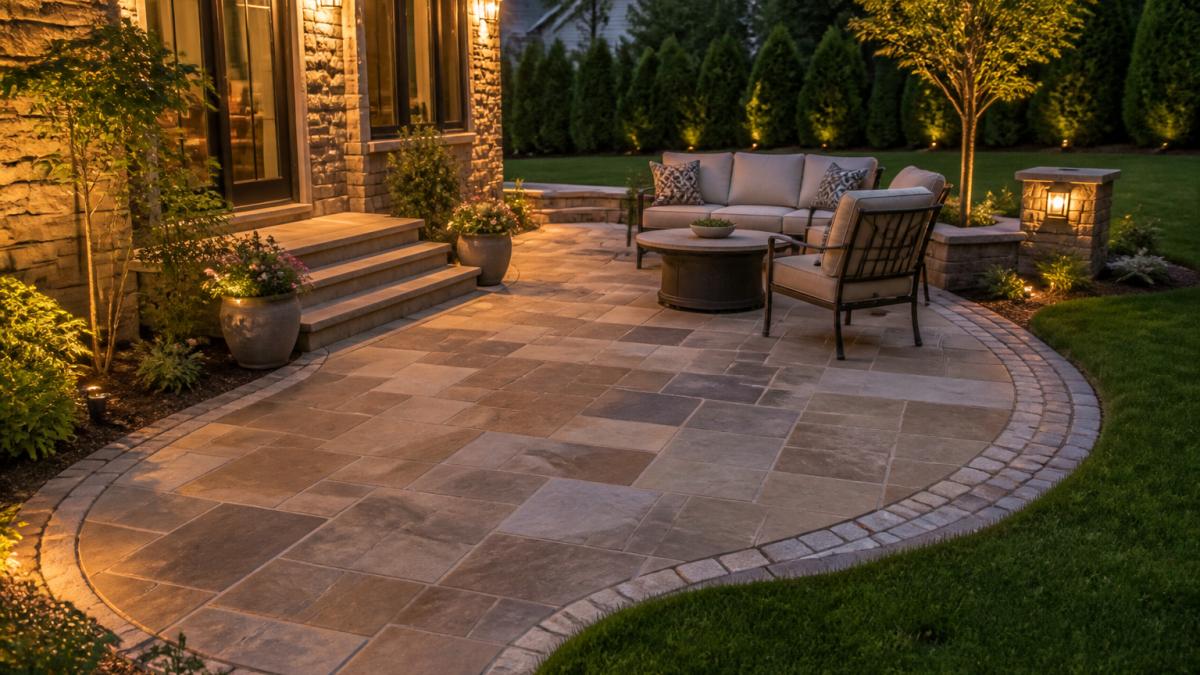
The residential stone work design landscape has shifted significantly. According to IBISWorld's 2026 Masonry Industry Analysis, residential construction now accounts for 35.1% of the U.S. masonry industry's revenue, down from 40.5% in 2022.
The key to successful residential stone work design is matching material choice to your project's functional demands. Explore our stone work services and portfolio to see what's available for your project.
Natural Stone vs. Manufactured Stone Veneer: Which Is Right for Your Project?
Natural stone and manufactured stone veneer each solve different problems, and the choice depends on your budget, aesthetic goals, and maintenance tolerance.
Natural stone is quarried directly from the earth, granite, limestone, slate, and others. It offers authentic texture, color variation, and a permanence that manufactured products cannot replicate. Natural stone typically costs more upfront but develops character over time as weathering creates patina.
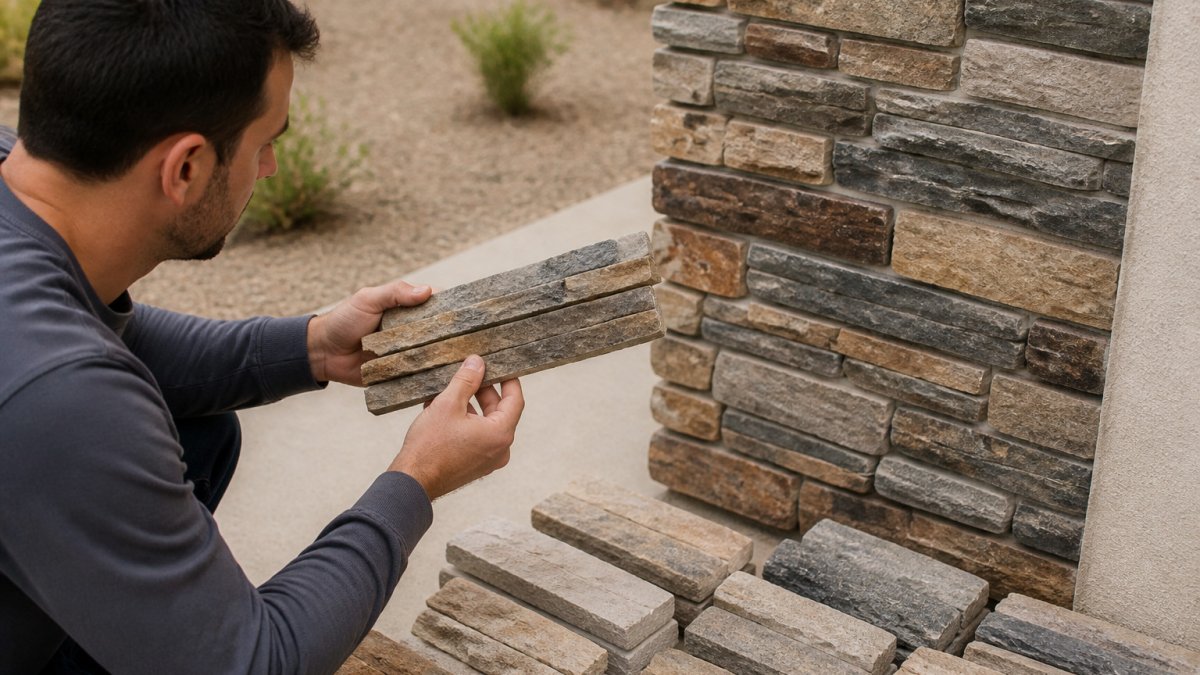
Manufactured stone veneer replicates the appearance of natural stone using concrete, pigments, and aggregates. It's lighter, faster to install, and costs significantly less. Modern manufactured veneer has improved dramatically, large-format profiles and natural neutrals now mimic authentic stone convincingly.
The decision often hinges on three factors: budget, permanence, and maintenance commitment. If you're planning a feature that will define your home's character for decades, natural stone justifies the investment. For secondary applications or budget-conscious projects, manufactured veneer delivers strong aesthetics at a fraction of the cost.
Stone Material Types and Their Best Uses
Granite, Limestone, and Slate
Granite is an igneous rock prized for its density and color range, from subtle grays to dramatic blacks with flecking. It's one of the hardest natural stones, making it ideal for high-traffic areas like driveways and outdoor kitchen countertops.
Limestone offers a softer, more refined aesthetic, warm creams, tans, and pale grays that photograph beautifully. It's more porous than granite, which means it stains more easily and requires more frequent sealing.
Slate is a metamorphic stone that splits naturally into thin, flat sheets, making it ideal for paving and cladding. It comes in deep grays, blacks, and occasionally purples or greens. Slate's natural cleft surface provides excellent traction, reducing slip hazards in wet conditions.
Quartzite, Travertine, and Fieldstone
Quartzite is one of the hardest natural stones available, formed from sandstone under extreme heat and pressure. It rivals granite in durability while offering warmer, softer color palettes, pinks, whites, and honey tones.
Travertine is a sedimentary stone formed from mineral-rich hot springs, characterized by its porous surface and natural holes. These voids create an authentic, rustic appearance that's become increasingly popular in contemporary design.
Fieldstone is a catch-all term for irregularly shaped stones found naturally on or near the surface. Each piece is unique, with varied colors, textures, and sizes. Fieldstone creates highly authentic, rustic aesthetics but requires skilled installation to fit pieces together tightly.
Different stones excel in different applications based on their hardness, porosity, and aesthetic qualities.
| Stone Type | Best Uses | Key Characteristic |
|---|---|---|
| Granite | Driveways, outdoor kitchens, high-traffic areas | One of the hardest natural stones |
| Limestone | Feature walls, fireplace surrounds, trim | Softer, more porous, easier to cut |
| Slate | Paving, cladding, pool surrounds | Natural cleft surface provides traction |
| Quartzite | Outdoor kitchens, high-use areas | Rivals granite in durability |
| Travertine | Pool surrounds, patios in warm climates | Porous, stays cooler underfoot |
| Fieldstone | Retaining walls, accent features, borders | Irregular pieces create rustic aesthetics |
Design Trends Shaping Residential Stone Work in 2026
Contemporary residential stone work design is moving toward three distinct directions: large-format profiles, natural neutrals, and mixed-material expressions. View our gallery of completed stone work projects to see visual examples of these design approaches. These aren't passing fads, they reflect deeper shifts in how homeowners view outdoor spaces as extensions of their homes.
Large-format stone reduces visible grout lines, creating cleaner, more modern aesthetics. Instead of 12-inch tiles or small pavers, designers are specifying 24-inch, 36-inch, or even larger pieces. This approach works particularly well in contemporary and minimalist designs where visual simplicity matters.
Natural neutrals, grays, tans, creams, and warm whites, have displaced the trend toward bold colors. These palettes age gracefully and coordinate with virtually any architectural style.
Mixed-material expressions combine stone with complementary materials, wood, metal, concrete, or brick. A stone retaining wall might incorporate steel edging. A patio might blend slate with concrete borders.
The Masonry Contractors Association of America's 2026 Manufactured Stone Veneer Trends identifies these three movements as dominant industry directions. What's driving them is a fundamental shift: stone and brick are no longer viewed as utilitarian building materials but as design elements that define spatial character.
Creating Outdoor Stone Fire Pit Design and Living Spaces
An outdoor stone fire pit becomes the gravitational center of your backyard, the gathering place where family and friends congregate. Proper design requires balancing safety, functionality, and aesthetics.
Structural design must account for thermal stress. Stone expands and contracts with temperature fluctuations, especially around a heat source. Experienced masons use flexible mortar joints and choose heat-resistant stone varieties.
Seating walls surrounding the fire pit should be 18-24 inches high, allowing comfortable conversation. Stone selection here prioritizes durability and safety. Avoid highly polished finishes, which become slippery when wet.
Clearance and safety matter more than aesthetics. Building codes typically require 10-15 feet of clearance from structures and overhanging branches.
Building Durable Stone Retaining Wall Design
Retaining walls serve a critical structural function: they hold back soil on slopes, preventing erosion and creating usable level space. Poor design fails catastrophically. Proper design lasts generations.
Structural principles are non-negotiable. A retaining wall must resist lateral pressure from soil and water.
Material selection for retaining walls prioritizes strength and stability. Large, dense stones, granite, quartzite, or fieldstone, work better than softer materials.
Drainage and maintenance determine longevity. Water is a retaining wall's primary enemy. Proper gravel backfill allows water to percolate through rather than pooling behind the wall.
Stonework Maintenance and Long-Term Care
Stone durability depends heavily on maintenance. Even the most carefully installed wall deteriorates without proper care.
Sealing is essential for porous stones like limestone, travertine, and sandstone. Sealing creates a hydrophobic barrier that prevents water infiltration and staining.
Cleaning should use pH-neutral cleaners specifically formulated for stone. Acidic cleaners (vinegar, lemon) and abrasive scrubbing damage stone surfaces. Pressure washing can work for hardy stones like granite but risks damaging softer materials.
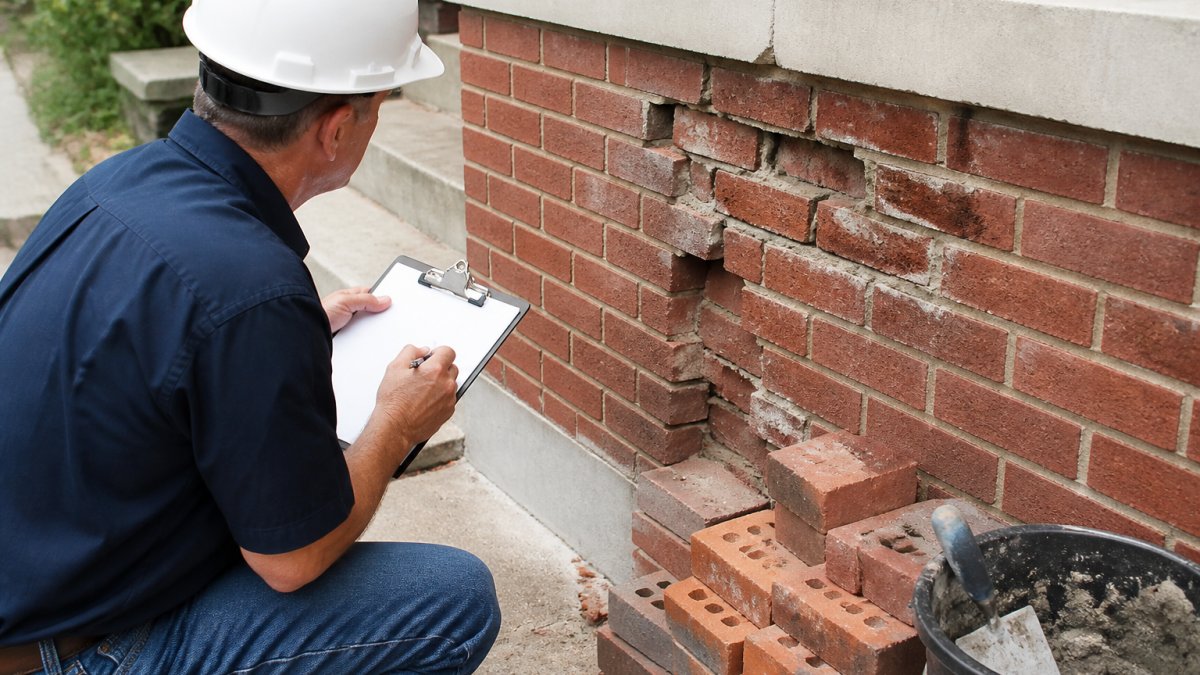
Joint maintenance involves periodic repointing, replacing deteriorated mortar between stones. Failing mortar allows water infiltration, which eventually destabilizes the entire structure. Repointing is labor-intensive but essential for long-term durability.
Seasonal care varies by climate. In freeze-thaw regions, ensure drainage is clear before winter to prevent ice buildup behind walls.
Planning Your Stone Work Project: Next Steps
Residential stone work design is one of the most rewarding home investments you can make, it enhances curb appeal, creates functional outdoor living space, and adds lasting value to your property.
The most common mistake homeowners make is underestimating the importance of site assessment. Soil conditions, drainage patterns, climate exposure, and existing structures all influence material selection and installation approach.
At Solid Rock Brick, we specialize in custom stone features, retaining walls, outdoor living spaces, and complete masonry installations that enhance both residential and commercial properties.
Contact Solid Rock Brick today to discuss your stone work project. We'll assess your site, explore material options that match your budget and aesthetic goals, and deliver professional installation backed by our commitment to complete customer satisfaction.
Frequently Asked Questions
What types of stone are best for residential stone work design?
The best stone depends on your project's location and purpose. Granite and quartzite offer exceptional durability for high-traffic areas like driveways and patios. Limestone and travertine provide softer, more elegant aesthetics for decorative features and outdoor living spaces. Slate works well for rustic applications, while fieldstone creates authentic, natural textures. Each material performs differently based on climate exposure, moisture, and foot traffic. Consult with a masonry professional to match stone type to your specific site conditions and design goals.
How do I choose between natural stone vs. manufactured stone veneer?
Natural stone offers authentic textures, durability, and timeless appeal but requires more skilled installation and higher initial cost. Manufactured stone veneer provides consistent sizing, easier installation, cost-effective options, and lighter weight for certain applications. Natural stone suits premium projects and structural elements like retaining walls and load-bearing features. Veneer works well for cladding, accents, and applications where budget or installation speed matters. Both can enhance curb appeal; your choice depends on budget, timeline, design vision, and the specific application.
What should I consider before building an outdoor stone fire pit design?
Before building an outdoor stone fire pit, assess site drainage, foundation stability, clearance from structures, and local fire codes. Plan the pit's size, depth, and stone layout to balance aesthetics with safety and functionality. Consider stone durability under high heat and freeze-thaw cycles. Design seating walls and surrounding features to create an integrated outdoor living space. Factor in maintenance access and ash removal. Work with a masonry contractor experienced in fire pit construction to ensure proper structural detailing, code compliance, and safe surface design.
How long does residential stone work typically take?
Project timeline depends on scope, complexity, and site conditions. Weather, material availability, and ground preparation affect scheduling. Structural work requiring inspections or permits may add time. Discuss your timeline early with your contractor; they can identify realistic start dates and completion windows based on current workload and seasonal factors.
Does stone veneer need special maintenance?
Both natural and manufactured stone veneer require periodic care. Seal natural stone periodically to protect against staining and moisture penetration. Clean stone surfaces annually with pH-neutral cleaners to remove dirt and prevent algae growth. Check mortar joints for cracks and have them repointed if needed. Inspect for water damage, especially in freeze-thaw climates. Manufactured veneer needs less maintenance than natural stone but still benefits from regular cleaning and occasional sealing. Proper drainage around stone features prevents moisture problems and extends material life significantly.
How do I choose a stone style that complements my home?
Evaluate your home's existing architectural style and color palette. Warm, earthy tones like tan, rust, and cream complement traditional and rustic designs. Cool grays and blacks suit modern and contemporary homes. Consider texture: smooth finishes feel refined; rough, natural textures add character and authenticity. Look at neighboring homes and local design trends for context. View samples in natural daylight at your property, not just indoors. Work with your contractor or designer to see how different stones interact with your home's siding, roofing, and landscaping before committing.
What questions should I ask a masonry contractor before starting a project?
Ask about their experience with your specific project type, timeline, and warranty. Request references and photos of completed residential work. Clarify the scope, materials, and cost structure in writing. Ask how they handle site preparation, drainage, and code compliance. Discuss weather delays, contingencies, and payment terms. Verify licensing, insurance, and bonding. Ask about their crew's training and whether they handle inspections. Confirm cleanup and project management practices. Understanding their process and communication style helps ensure your vision is delivered as planned.
The difference between stone work that merely looks good and stone work that endures comes down to expertise, material selection, and attention to detail during installation. Solid Rock Brick brings all three to every project we undertake.