 ultimate-guide
How to Choose Masonry Stone Veneer for Your Home
Last Updated: November 4, 2026
Quick Summary
Choose masonry stone veneer by starting with the application area, not the stone sample, since the wall decides product type, weight, substrate, and budget. Then compare natural versus manufactured stone, match color and texture to the house, and confirm the assembly meets code and climate requirements.
- Masonry stone veneer is non-structural cladding typically 1 to 2.5 inches thick over a prepared substrate.
- Natural stone suits feature walls and fireplaces; manufactured stone suits large facades and tight budgets.
- Installed cost breaks into material, substrate prep, accessories, labor and access, and detail work.
- Adhered veneer bonds to solid backing; anchored veneer uses a drainage cavity and mechanical ties.
- In freeze-thaw regions, specify low-absorption stone rated for freeze-thaw with correct flashing and weeps.
Table of Contents
- Start With the Application Area, Not the Stone
- Natural Stone Veneer vs Manufactured Stone Veneer
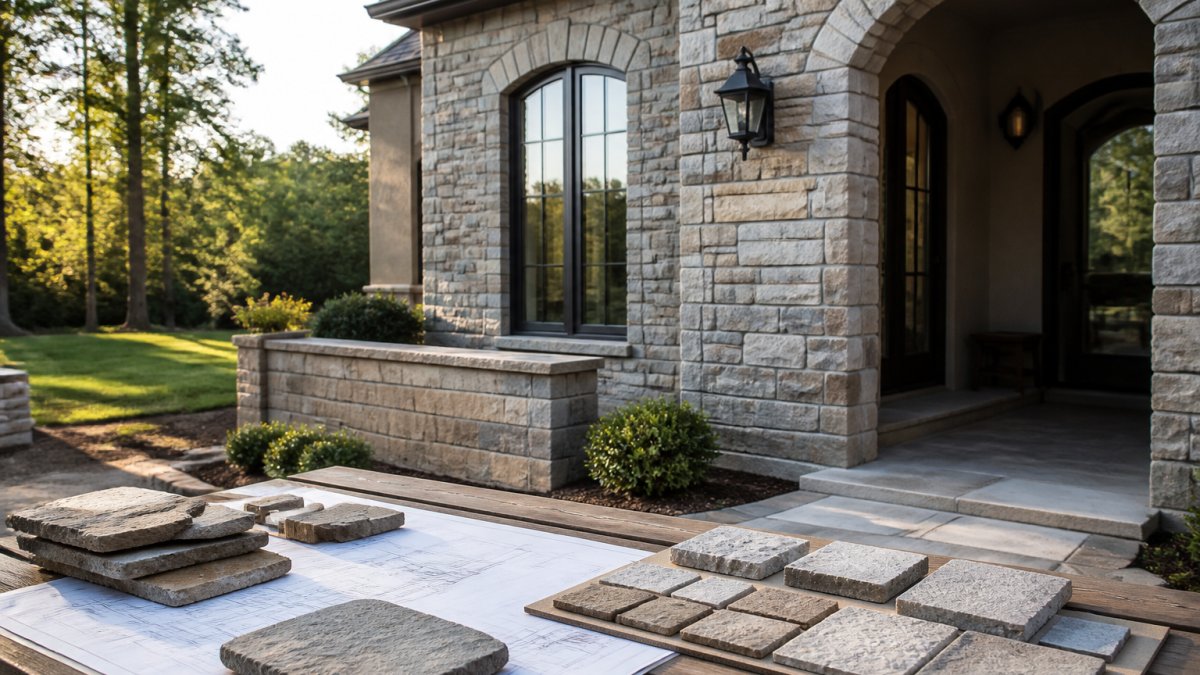
- Stone Veneer Colors and Textures That Fit the House
- Stone Veneer vs Brick Cost and Veneer vs Full-Depth Masonry
- Stone Veneer Installation Requirements and Code Basics
- A Project-Specific Selection Checklist
- Plan Your Veneer Project With Solid Rock Brick
- Frequently Asked Questions
Start With the Application Area, Not the Stone
Most homeowners begin with a stone sample and a color in mind. That's the wrong order.
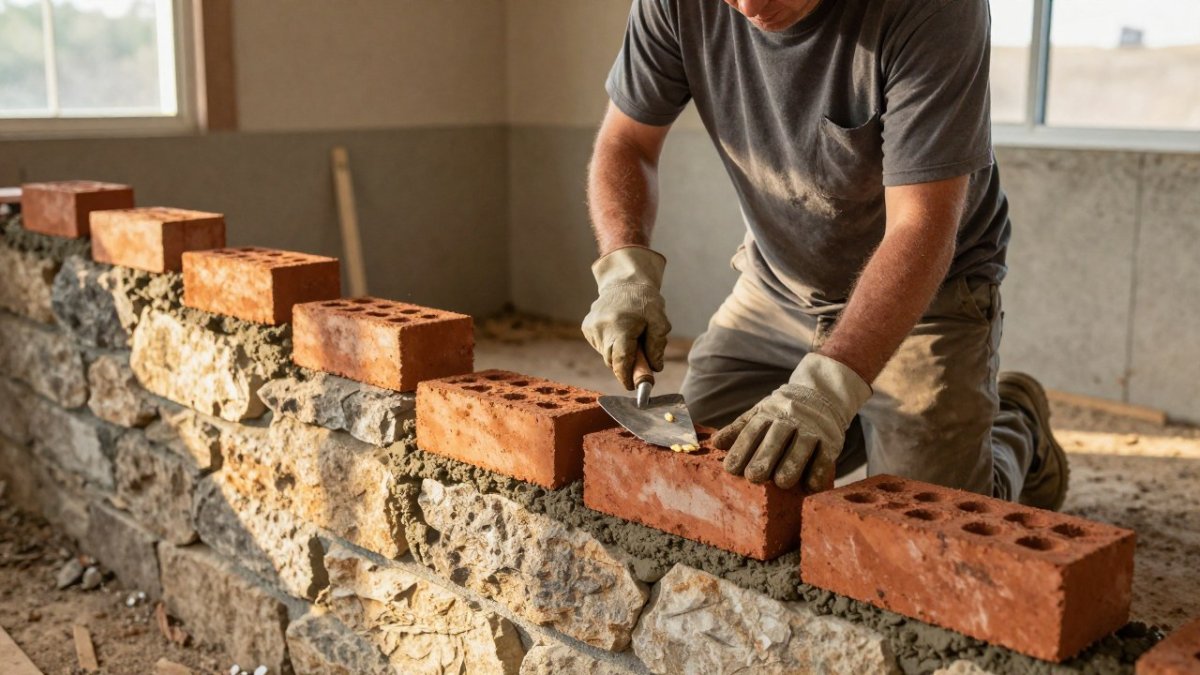
Masonry stone veneer is a non-structural cladding of natural or manufactured stone, typically 1 to 2.5 inches thick, fastened over a prepared substrate rather than built up in full-depth courses. At Solid Rock Brick, we've spent 16 years installing stone and brick work, and the smoothest projects are the ones where the wall, not the swatch, drove the decision.
Before you shop, answer four questions: Is the surface exterior or interior? Is it a full wall, wainscot, fireplace surround, or column base? What is behind the finish, and is it rated to carry cladding? And how much weather will the face take?
A chimney breast in a covered entryway and a freestanding garden wall ask for different products. A fireplace surround indoors tolerates profiles that would look busy across an entire facade.
Natural Stone Veneer vs Manufactured Stone Veneer
The choice between natural stone veneer and manufactured stone veneer comes down to variation, weight, and how much uniformity you want.
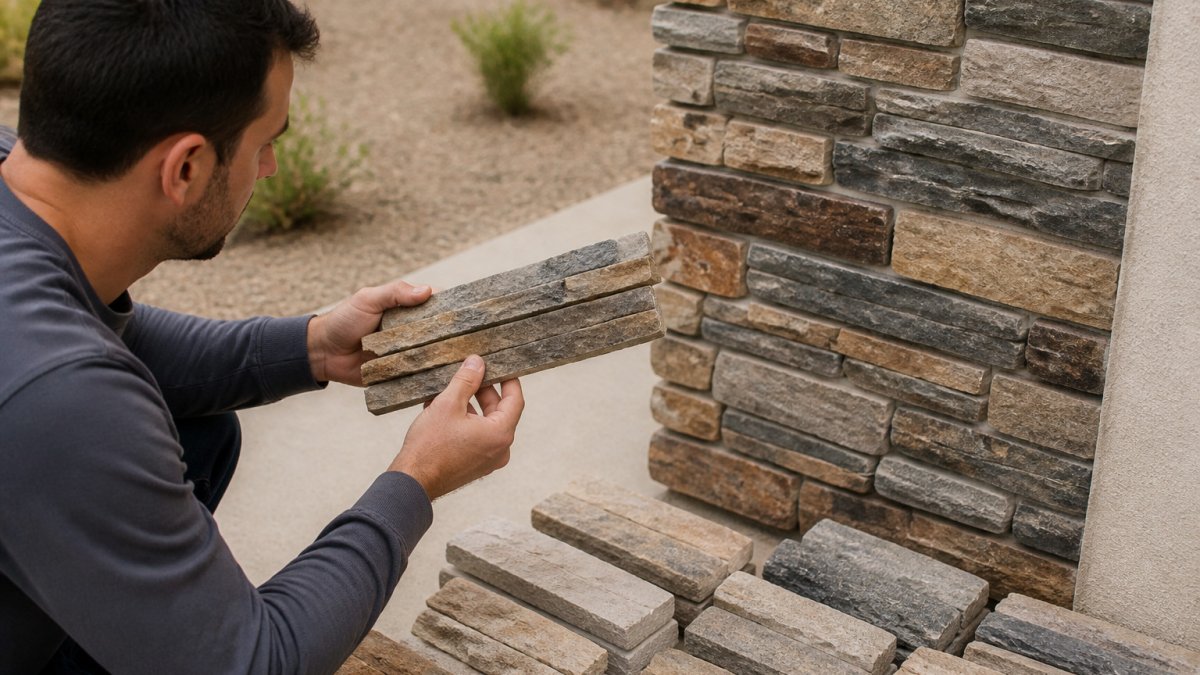
Natural thin veneer gives you genuine geological color and texture, and no two pieces match exactly. That variation is the point. It also means heavier units in many product lines, more sorting on site, and a face that changes character as it weathers.
Manufactured stone offers consistent profiles, repeatable color lots, and lighter pieces that are easier to handle on tall walls and remodels.
Neither product is "better" in the abstract. Match them to the job:
- Natural stone: best for feature walls, fireplace surrounds, and entries where authenticity matters most.
- Manufactured stone: best for large facades, tight budgets, and projects where weight and matching replacement pieces matter.
- Blended approach: natural stone on the focal point, manufactured stone on secondary planes.
How Each Type Weathers and Ages
Natural stone generally holds its color because the color runs through the material. Freeze-thaw cycles can still open hairline cracks in some stone types, and iron-bearing stone may develop a patina over time.
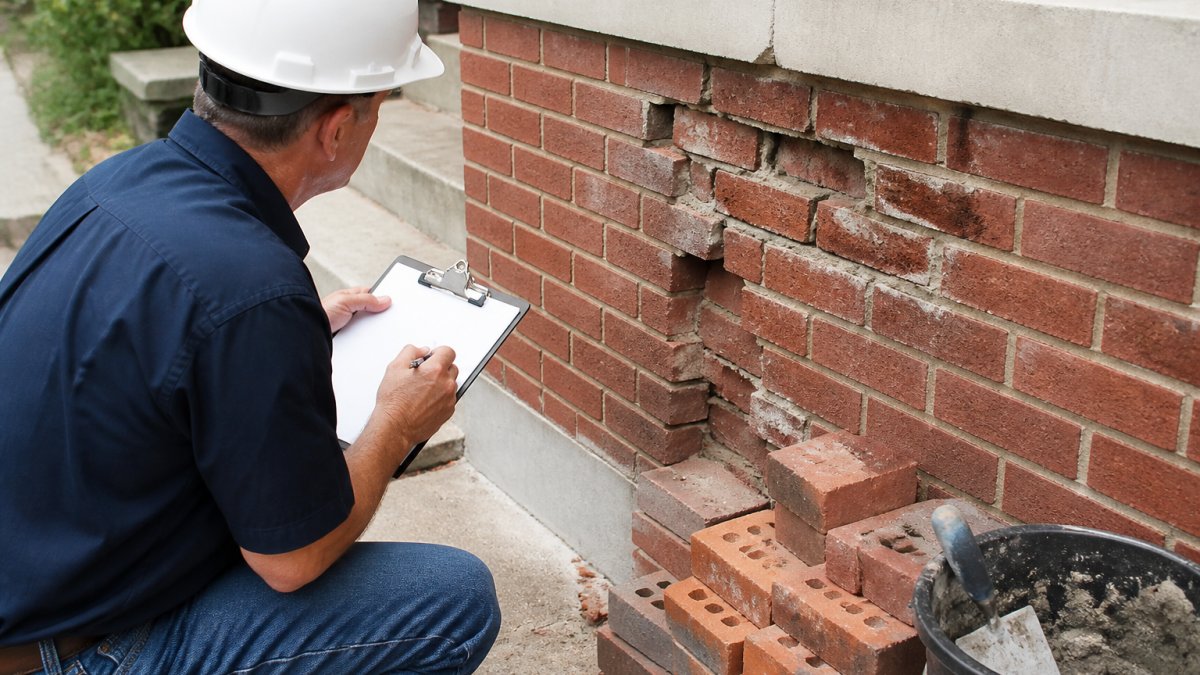
Manufactured stone relies on surface coloring, so abrasion and repeated wetting can dull the face faster in exposed spots. Both types need correct flashing and drainage behind the cladding; skipping the water-resistive barrier and weep details is the mistake that shortens the life of an otherwise good installation.
Stone Veneer Colors and Textures That Fit the House
Stone veneer colors and textures should echo the home's existing materials, not compete with them.
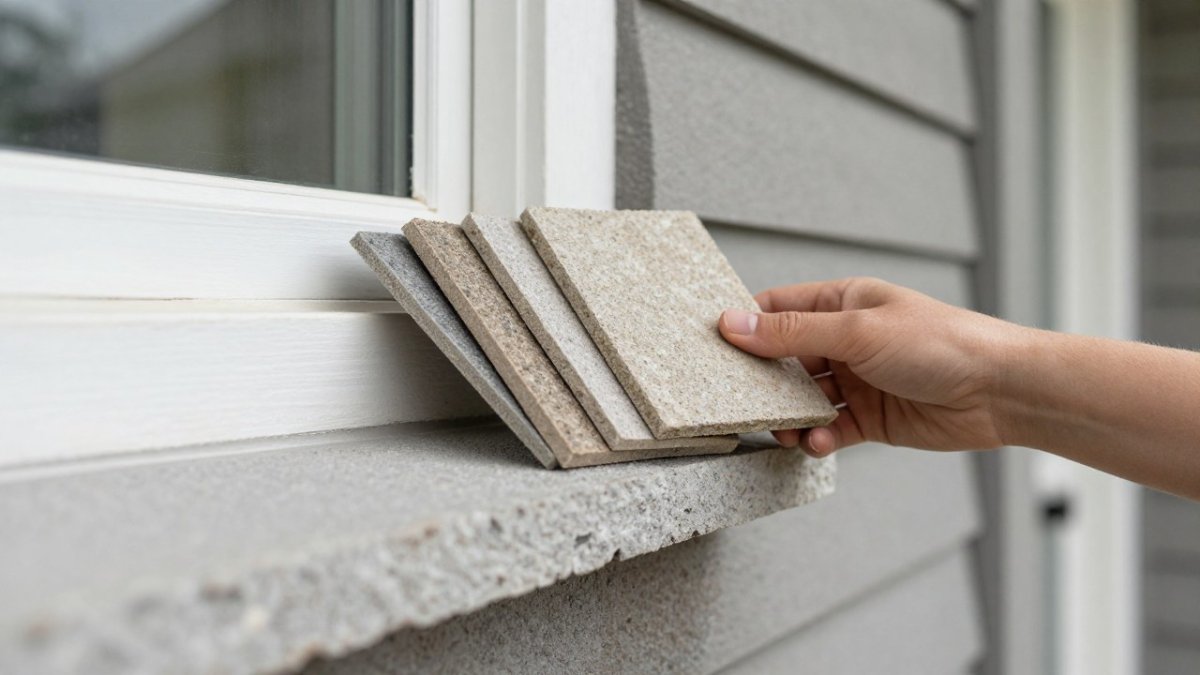
Texture carries visual weight. Ledge stone and ledgestone create strong horizontal shadow lines and read as rustic. Fieldstone and cobble profiles feel irregular and older.
Color variation is a design tool. A tight, uniform range looks contemporary; a wide range with grays, tans, and rusts looks traditional and hides dirt better.
Matching Veneer to Architectural Style
Match the veneer profile to the architecture and the result looks intentional. Ranch and craftsman homes pair well with fieldstone and ledge stone. Colonial and traditional facades suit ashlar and squared patterns in warmer tans and buffs.
Trim and window color matter as much as the stone. Browse completed stone work in our gallery to see how these combinations land on real houses.
Stone Veneer vs Brick Cost and Veneer vs Full-Depth Masonry
Stone veneer vs brick cost and veneer vs full-depth masonry are two different comparisons, and both affect the budget. Thin stone veneer usually costs less installed than full-depth stone masonry because it uses far less material and a lighter support assembly. Pricing depends on quantity, dates, and delivery, so request a quote from Solid Rock Brick for current prices.
Here's how the options compare on the factors that drive price:
| Option | Relative Installed Cost | Weight on Wall | Best For |
|---|---|---|---|
| Manufactured stone veneer | Lowest | Light | Large facades, tight budgets |
| Natural thin veneer | Moderate | Moderate | Feature walls, entries, fireplaces |
| Brick veneer | Moderate | Moderate | Traditional facades, accents |
| Full-depth stone masonry | Highest | Heaviest | Structural walls, freestanding features |
Where the Installed Cost Actually Goes
A per-square-foot veneer price is a blended number, and it hides the line items that decide whether your project lands at the low or high end of the range. An installed quote is typically broken into several line items:
- Material: the stone itself, sold by the square foot of coverage (with a waste factor for cuts and corners) or by the box for manufactured lines.
- Preparation and substrate: removing existing finishes, repairing sheathing, installing the water-resistive barrier, and adding lath or a drainage plane. On a remodel, this bucket can rival the stone cost.
- Accessories: corner pieces, capstones, sills, hearth stones, and trim, priced per linear foot or per piece and routinely underestimated, a facade with many outside corners and window returns can carry a meaningful premium.
Complex walls with many openings, corners, and height changes generally cost more to install than simple flat walls.
Lifecycle Value, Not Just First Cost
First cost is only half the comparison. Full-depth masonry earns its higher price when the wall is structural or freestanding, a garden wall, a load-bearing feature, a chimney, because it does a job veneer cannot.
Over time, the maintenance profile differs by type.
Confirm that the water-resistive barrier, flashing, and lath are itemized in writing before you sign. For a real number on your project, request a quote from Solid Rock Brick.
Stone Veneer Installation Requirements and Code Basics
Stone veneer installation requirements start with the substrate and the water management behind it. The cladding is not structural, so the wall behind it must be sound, and the assembly must shed water rather than trap it. The details below are the ones that most often decide whether an inspection passes and whether the wall performs.
Adhered vs Anchored Assemblies
The two common veneer assemblies behave differently and are governed by different provisions:
- Adhered veneer is bonded directly to a solid backing, typically a masonry or concrete wall, or a sheathed framed wall with the correct substrate, using mortar over a prepared surface. It relies on a water-resistive barrier, corrosion-resistant lath and fasteners where the manufacturer requires them, and proper clearance above grade, and is common for manufactured stone and thin natural stone on framed walls.
- Anchored veneer uses a drainage cavity and mechanical anchors or ties to connect the stone to the backing, with flashing and weep details at the base and over openings. Anchored assemblies are typical for full-depth masonry and for some thin-stone systems on taller walls.
The manufacturer's published installation instructions and the locally adopted building code govern the specifics. Your local building code official has the final say on which code edition applies.
The Details Inspectors and Water Look For
- Water-resistive barrier: a continuous barrier over the sheathing, lapped and integrated with flashing so water that gets behind the stone drains out rather than into the wall.
- Flashing: at the base of the wall, over windows and doors, at roof-to-wall intersections, and under capstones. Flashing is what turns a wall that sheds water into a wall that keeps it out.
- Weeps and drainage: weep screeds or weep holes at the base of anchored assemblies let trapped moisture escape.
Fire Rating and Interior Applications
Interior work brings its own code questions. A stone veneer surround around a fireplace or wood stove must maintain the clearances to combustibles that the appliance listing and the code require, and the assembly behind it must be rated for the heat exposure. Where the veneer is part of a rated wall assembly, the fire-resistance rating of that assembly governs what can be installed over it.
Climate, Moisture, and Freeze-Thaw Suitability
Climate decides which products and details survive. In freeze-thaw regions, water that gets behind the veneer and freezes can spall the face or loosen the bond.
In hot, humid climates, drainage and ventilation behind the cladding prevent trapped moisture.
This is where installation quality separates a finish that lasts from one that fails. Solid Rock Brick serves residential and commercial properties, and we build the assembly to the code and the product's instructions.
Watch out: the most common failure is a beautiful stone face over a wall with no continuous water-resistive barrier or missing base flashing, the stone gets blamed, but the assembly is the cause.
A Project-Specific Selection Checklist
Run every candidate product through the same checklist before you commit. This is the step most guides skip, and it's where good projects are won.
- Application area confirmed: exterior wall, interior feature, fireplace, column, or freestanding wall
- Substrate verified: sound backing and correct assembly for the chosen veneer type
- Climate rating checked: freeze-thaw and absorption data match your region
Quality and authenticity checks belong here too. For manufactured stone, confirm the product is rated for exterior use and ask how color lots are matched for replacements. For natural stone, inspect for consistent thickness and sound faces.
Plan Your Veneer Project With Solid Rock Brick
The stone is the last decision, not the first. Nail down the application area, the assembly, and the climate requirements, and the right product becomes obvious.
With 16 years of experience across stone work, brick work, and concrete, Solid Rock Brick serves residential and commercial clients.
Ready to move from samples to a plan? Contact Solid Rock Brick to discuss your project and get a quote.
Frequently Asked Questions
Which stone veneer looks the most realistic?
Natural stone veneer is the most realistic because it is real stone cut thin, so every piece carries true color variation and texture. High-quality manufactured stone has closed much of the gap, with molds cast from real stone and hand-applied coloring. The difference shows most at close range and on corners. Ask to see full-size samples and a finished wall, not just a small swatch, before you decide.
What are the disadvantages of stone veneer?
Stone veneer is a cladding, not a structural material, so it cannot carry load or replace full-depth masonry where structure is needed. It also depends on a correct substrate, flashing, and weep system, so poor installation causes moisture problems. Manufactured stone can fade or chip if the finish is low quality, and natural stone costs more and varies between lots. Plan for samples from the same batch to avoid color mismatch.
How do natural and manufactured stone veneer differ in cost and upkeep?
Pricing depends on quantity, dates, and delivery, so request a quote from Solid Rock Brick for current prices. Manufactured stone is lighter than natural stone, which can reduce structural framing needs. Upkeep is similar for both: rinse occasionally, avoid harsh acid cleaners on manufactured stone, and reseal only if the manufacturer recommends it. Get a written quote that separates material, labor, and substrate prep so you can compare fairly.
Can stone veneer be installed on any exterior wall?
No. Stone veneer installation requirements depend on the wall assembly. The substrate must be sound and able to carry the veneer weight, and the wall needs a weather-resistive barrier, flashing at openings and transitions, and a weep system at the base. Adhered veneer over wood or steel framing follows specific fastener and lath rules, and some walls need an engineer's review. A contractor should confirm the assembly before ordering material.
How should I compare stone veneer and brick cost for my project?
Compare installed cost, not just material price. Stone veneer vs brick cost differs by profile, thickness, and how much cutting and detailing the job needs. Brick and stone veneer each have different material and installation considerations depending on texture, color, and pattern. Ask each quote to list substrate prep, flashing, mortar, labor, and cleanup so the totals reflect the same scope.
How do I choose the right stone veneer profile for my home?
Start with the architectural style and the visual weight you want. Ledge stone and ledgestone give strong horizontal lines and suit modern and rustic homes. Fieldstone and rounded profiles read softer and fit traditional styles. Match the veneer depth and texture to nearby trim, roof color, and windows, and keep the profile consistent across the facade. View large samples on the actual wall in daylight before committing.
Choosing masonry stone veneer rewards patience at the front end. Verify the substrate, match the product to your climate, test colors against the house, and vet the installer before work begins. Get those right and the finish will hold its look for decades. Get started with Solid Rock Brick and build a stone finish that fits your home and lasts.