 blog
Masonry Restoration or Complete Replacement: Which Fits
Last Updated: November 5, 2026
Quick Summary
Masonry restoration keeps the existing brick, stone, and mortar and repairs only what has failed, while complete replacement removes the damaged masonry and rebuilds the wall. The right choice depends on how much of the original structure is still sound. Restoration is usually cheaper upfront, but widespread damage can push the total cost toward replacement.
- Restoration usually covers repointing mortar joints, replacing individual bricks, and sealing cracks.
- Replacement is the practical option when damage is widespread rather than localized.
- Damage across more than roughly 40% of a wall often makes replacement the more sensible route.
- Bulging, leaning walls that move when pressed call for structural assessment, not cosmetic repair.
- A written estimate from an on-site inspection is the most reliable basis for comparing both options.
Table of Contents
- How Masonry Restoration and Complete Replacement Differ
- Signs Masonry Needs Replacement Instead of Repair
- Masonry Restoration vs Complete Replacement Cost
- Brick Mortar Repair: When Repointing Is Enough
- Masonry Restoration vs Complete Replacement Pros and Cons
- A Decision Tree Based on Damage Severity
- Booking a Masonry Assessment for Your Property
- Frequently Asked Questions
How Masonry Restoration and Complete Replacement Differ
Masonry restoration keeps the existing brick, stone, and mortar and repairs what has failed. Complete replacement removes the damaged masonry and rebuilds the wall or façade. The choice comes down to how much of the original structure is still sound. U.S. Army Corps of Engineers report on repair and restoration of brick and stone masonry
Restoration usually covers repointing mortar joints, replacing individual bricks, sealing cracks, and cleaning or weatherproofing the surface. You can see the masonry services Solid Rock Brick offers in Jackson, MS, including the work this covers, on our masonry services page. It preserves the original material and appearance, which matters on older buildings. Replacement is the better path when the wall itself has lost its structural integrity.
Costs follow the same logic. Repair is typically cheaper upfront, but extensive damage can push the total toward replacement. Pricing depends on the scope of the work, so request a quote for your property.
Signs Masonry Needs Replacement Instead of Repair
Replacement becomes the practical option when damage is widespread rather than localized. A few cracked bricks can be swapped out. A wall where cracking, bulging, and loose courses run across large sections usually cannot be stabilized by patching.
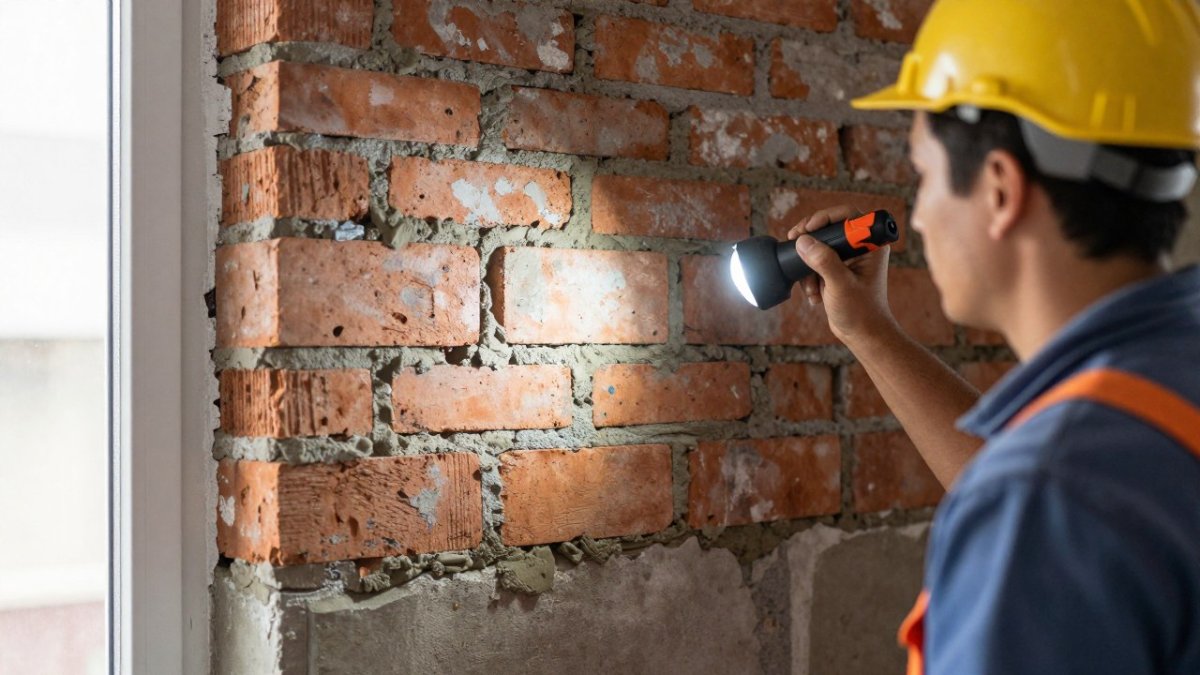
Watch for these warning signs:
- Bulging or leaning walls that move when pressed
- Spalling across most of a façade, where faces of brick flake away
- Cracks wider than a quarter inch that continue to grow
- Brick that crumbles when touched, indicating the material has deteriorated throughout
- Repeated failures in the same area after previous repairs
When a contractor finds damage across more than roughly 40% of a wall, replacement often becomes the more sensible route. American Wall's guide on when to repair or replace masonry
Hidden Damage a Visual Check Will Miss
Surface condition does not always reflect what sits behind it. Water can travel through a wall cavity and rot the backing, corrode ties that hold the veneer in place, or weaken the mortar well below the visible face. A wall that looks fine from the sidewalk may need opening up before anyone knows whether restoration will hold.
This is why a proper assessment matters before committing to either option.
Masonry Restoration vs Complete Replacement Cost
Upfront price is the easiest number to compare and the least reliable basis for the decision. Restoration usually costs less on day one because it keeps most of the existing wall in place. Replacement costs more because it removes material and rebuilds the assembly. The gap between the two narrows, and sometimes reverses, once you account for how long each option lasts and what it costs to maintain.
A useful way to compare is to line up four numbers for each option:
- Initial cost, labor, materials, access, permits, and disposal
- Expected service life, how many years before major work is needed again
- Routine maintenance, repointing, sealing, and water management over that service life
- Disruption, how long the building is unusable, noisy, or wrapped in scaffolding
Restoration generally pencils out best when the underlying structure is sound and the damage is confined to mortar and surface units. Replacement tends to win when restored masonry would need repeated interventions, a wall that has already been patched several times in the same area is a common example.
Labor is the largest single driver of either price. Skilled masonry labor varies by region, skill level, and access difficulty, so a written estimate is the most reliable basis for comparison. Replacement consumes more labor hours per square foot because every course is removed and reset, and it adds site preparation, temporary protection, and hauling that restoration does not. Material cost cuts the other way: matching historic brick or stone for a restoration can cost more per unit than new material for a rebuild, especially when the original units are no longer manufactured.
Be cautious of a low restoration bid that does not include repointing the full wall, replacing all spalled units, and addressing the water source behind the damage, since a partial patch may fail and make later work more expensive.
Because scope drives price more than any published rate, a written estimate based on an on-site inspection is the most reliable figure. Ask for the estimate to separate restoration and replacement line items so you can compare them on the same assumptions about service life and maintenance.
Brick Mortar Repair: When Repointing Is Enough
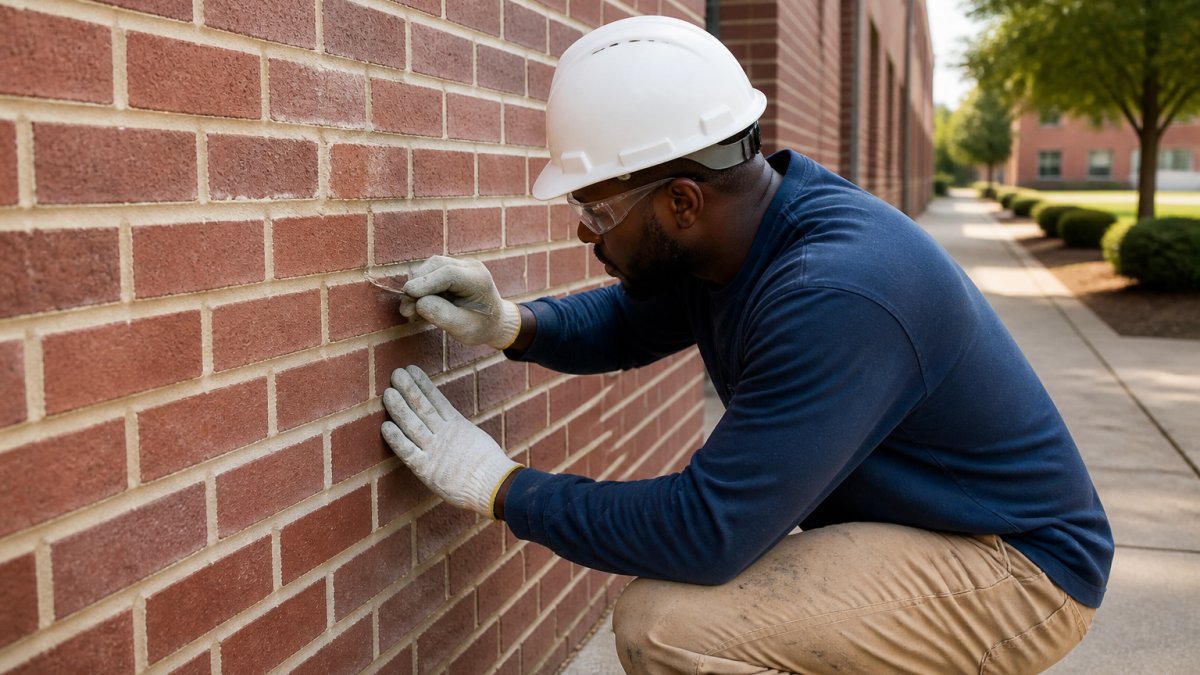
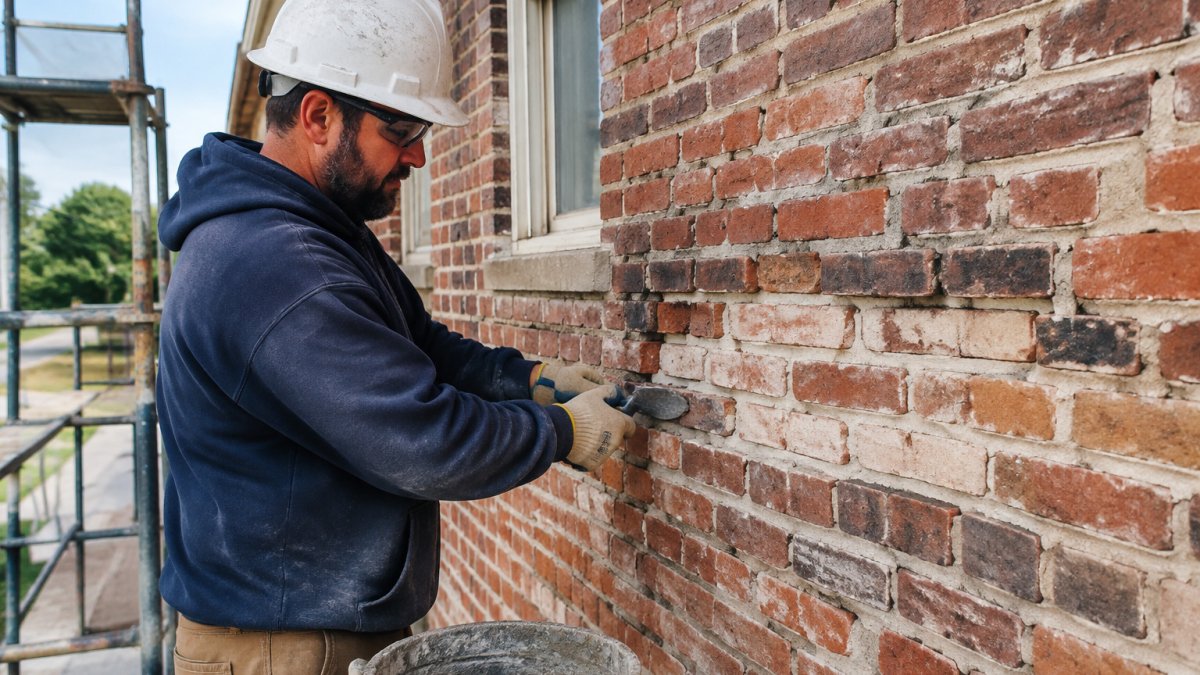
Repointing, also called tuckpointing, replaces deteriorated mortar in the joints without touching the brick. It is the most common restoration step and often the right answer when the bricks themselves are still solid. Damaged mortar lets water in, so repointing protects the wall from freeze-thaw damage.
Repointing is enough when:
- The bricks are intact and firmly set
- The damage is limited to joints rather than the brick faces
- The new mortar can be matched to the original in strength and color
Mortar that is harder than the brick can cause the brick to crack, so the replacement mix must suit the existing material.
Masonry Restoration vs Complete Replacement Pros and Cons
Restoration
- Pros: Lower upfront cost, preserves original material and character, less disruption to the building
- Cons: Only works if the structure is sound, can need repeat maintenance, may not match new materials perfectly
Complete Replacement
- Pros: Fixes structural problems at the source, produces a uniform wall, can offer longer service life
- Cons: Higher upfront cost, more disruption and access requirements, loses original material
Neither option wins in every case. The right answer depends on the wall's condition, the building's age, and how long you plan to keep the structure.
A Decision Tree Based on Damage Severity
The sequence below turns visible symptoms into next steps. It is a triage tool, not a substitute for an on-site assessment, the further down the list you go, the more the answer depends on conditions a visual check cannot see.
- Is the damage limited to mortar joints, with the brick faces intact? Repointing is usually enough. The mortar is the sacrificial layer; replacing it before water reaches the brick is the cheapest intervention available.
- Are individual bricks cracked or spalled, but the surrounding wall is sound? Spot-replace the affected units and repoint the adjacent joints. Isolated failures are a maintenance item, not a structural one.
- Is damage spread across a large share of the wall? Move to a full assessment. Widespread spalling or crumbling usually means the material itself has deteriorated, and patching individual units will not keep pace with the failure.
- Is the wall bulging, leaning, or moving when pressed? Treat this as a structural concern and stop treating it as a cosmetic one. Movement means the wall is no longer carrying load the way it was designed to, and restoration alone will not correct it.
- Have previous repairs failed in the same area? Repeated failure is evidence that the underlying cause, water entry, corroded ties, or a failed backing, was never addressed. Rebuilding that section is often the only durable fix.
| Damage Pattern | Likely Approach | Typical Scope |
|---|---|---|
| Deteriorated mortar joints | Restoration (repointing) | Joints only |
| Scattered cracked or spalled bricks | Restoration (spot replacement) | Individual units |
| Widespread spalling or crumbling | Evaluate both | Section or full wall |
| Bulging, leaning, or moving wall | Complete replacement | Full wall or section |
| Repeat failures in one area | Complete replacement | Section or full wall |
What the Inspection Looks For Beyond the Surface
Surface appearance is a poor predictor of what sits behind it. A proper assessment checks the mechanisms that actually decide whether restoration will hold:
- Wall movement, plumb and level readings, crack monitoring over time, and whether cracks are active or dormant
- Moisture pathways, where water enters, how it travels through the cavity, and whether flashing and weep systems are working
- Ties and anchors, corrosion of the metal ties that hold a veneer to its backing, which is invisible until the wall is opened
- Concealed deterioration, soft or crumbling backing, deteriorated shelf angles, and mortar that has lost bond well below the visible face
This is why a wall that looks fine from the sidewalk can still need opening up before anyone commits to restoration.
When a Professional Structural Assessment Is Essential
Some conditions move the decision out of the contractor's hands and into an engineer's. Bring in a licensed structural engineer when you see any of the following, and check whether your local building department requires sealed drawings or a permit before work begins:
- A wall that is bulging, leaning, or visibly out of plumb
- Cracks that are widening or that step diagonally across the masonry
- Movement in a wall that carries floor or roof loads, not just a veneer
- A building that will remain occupied during the work, where temporary stabilization may be needed
- Any scope that removes a load-bearing wall or changes the structural assembly
Watch out: temporary shoring and stabilization are sometimes required before an assessment can even be completed safely, do not let a contractor begin demolition on a moving wall without an engineer's sign-off.
Booking a Masonry Assessment for Your Property
The fastest way to decide is an on-site assessment. A contractor can check mortar condition and judge whether the structure can be restored. Contact Solid Rock Brick to request a quote for your property.
Solid Rock Brick serves residential and commercial clients in Jackson, MS, and the surrounding area. Before booking, you can browse our completed masonry work to see the kinds of restoration and rebuilding projects we handle.
Frequently Asked Questions
What is the difference between masonry restoration and complete replacement?
Masonry restoration keeps the existing brick or stone and repairs the damaged parts, typically through repointing, patching, or cleaning. Complete replacement removes the damaged masonry and rebuilds the wall or facade with new materials. Restoration preserves original material and character, while replacement makes sense when damage is widespread or structural. Pricing depends on the scope of work, so contact the company directly for a quote.
How do you know when masonry needs to be replaced instead of restored?
Replacement is usually worth considering when more than about 40 percent of a wall shows damage, when bricks or stones are spalling deeply, when the wall leans or shows structural movement, or when repeated repairs keep failing. American Wall notes that extensive damage can make replacement more practical. A professional inspection can confirm whether the problem sits only in the mortar joints or extends into the masonry units and the structure behind them.
Is masonry restoration cheaper than complete replacement?
Restoration often costs less upfront, and However, savings depend on the project. If restored masonry will need frequent maintenance, complete replacement can deliver better long-term value. Compare the expected lifespan of each option, not just the initial invoice. Pricing depends on quantity, access, and scope, so request a quote for your property.
Can crumbling brick mortar be repaired without replacing the bricks?
Yes. When the bricks are sound but the mortar joints have eroded, repointing (also called tuckpointing) removes the failing mortar and packs in new mortar matched to the original in strength and appearance. This restores weather resistance without replacing the brick. If the bricks themselves are cracked, spalled, or structurally compromised, individual units or larger sections may also need replacement before repointing will hold.
Solid Rock Brick has 16 years of masonry experience across residential and commercial properties in Jackson, MS. Reach out to get an honest assessment of whether your wall needs restoration or replacement.