 ultimate-guide
Get a Quote for Masonry Repair: What to Know
Table of Contents
- Why You Need a Professional Masonry Repair Quote
- What to Include When Requesting a Masonry Repair Estimate
- Questions to Ask a Masonry Contractor Before Hiring
- Understanding the Average Cost of Brick Repair
- Using a Masonry Repair Estimate Template
- How to Compare and Evaluate Masonry Quotes
- Red Flags and What to Watch For
- Next Steps After Getting Your Quote
- Frequently Asked Questions
Last Updated: October 16, 2026
Why You Need a Professional Masonry Repair Quote
A masonry repair quote isn't just a price, it's your roadmap to the scope of damage, materials, and timeline. Without one, you're guessing at costs that vary widely depending on what's wrong with your brick, stone, or mortar.
Masonry damage isn't always visible at first glance. Spalled bricks, crumbling mortar, and structural cracks develop over years of weather exposure, often spreading beyond what you can see. A professional inspection and detailed quote from a licensed masonry contractor reveals the full extent of the problem and prevents costly surprises mid-project.
At Solid Rock Brick, we've spent 16 years helping homeowners and commercial property managers understand what their masonry actually needs. A solid estimate clarifies what's essential versus cosmetic, locks in pricing, and gives you something concrete to compare.
What to Include When Requesting a Masonry Repair Estimate
Providing the right information upfront saves time and ensures accurate quotes. Describe the specific issues: brick replacement, repointing, chimney repair, or structural concerns like sagging bricks.
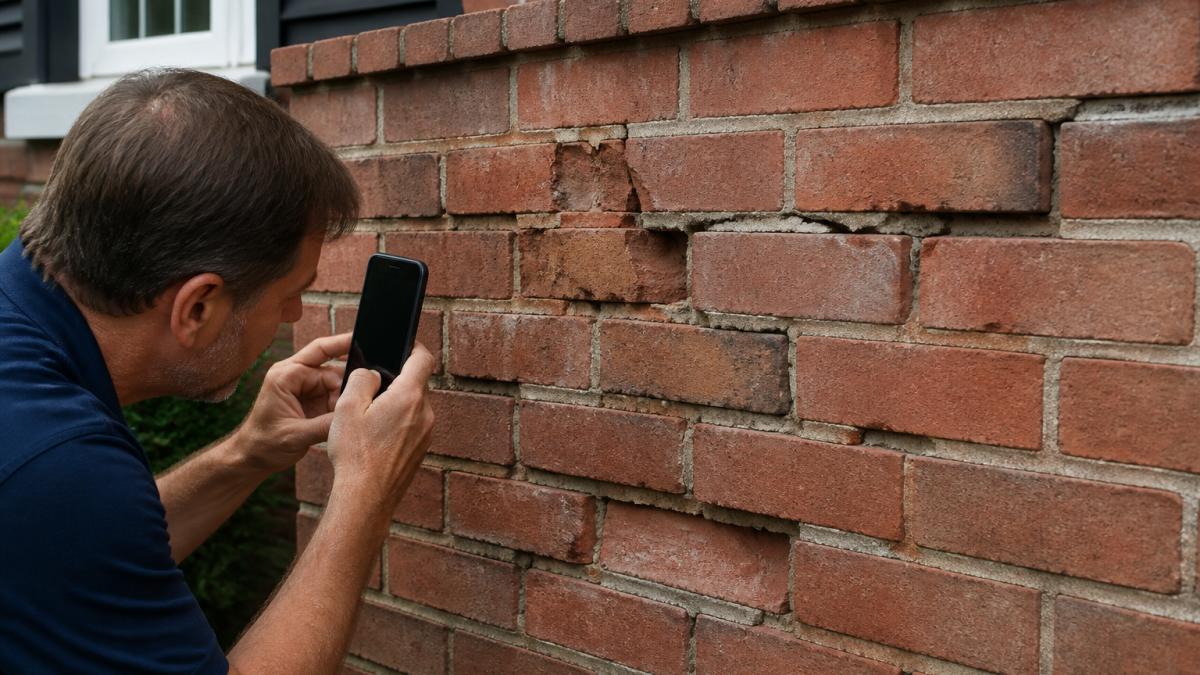
Include photos from multiple angles and distances, contractors need the overall condition plus close-ups of problem areas. Mention whether damage affects one section or the entire structure, and note your home's age, since older properties often have different mortar compositions.
Specify your timeline and budget range so contractors know whether you need emergency stabilization or full restoration. Mention previous repairs or foundation work, and clarify whether this is residential or commercial, since scope and materials differ.
Questions to Ask a Masonry Contractor Before Hiring
Before you commit, ask these questions to assess expertise. Ask specifically about your type of damage, brick repair, stone repair, repointing, and chimney work require different skill sets.
Request details on their process: how they diagnose problems, what inspection methods they use, and whether they provide a written scope of work outlining exactly what will be repaired and with what materials.
Ask about materials and matching. Can they match your existing masonry for brick replacement or repointing? Mortar color and composition matter for both aesthetics and structural performance.
Verify licensing and insurance, ask for proof of current licenses and general liability insurance, which protects you if something goes wrong. Ask about warranties too; reputable contractors stand behind their repairs.
Finally, ask about timeline and payment terms: start date, project duration, deposit, and payment schedule. Clear answers prevent scheduling conflicts and payment disputes.
Understanding the Average Cost of Brick Repair
Most pages that rank for masonry repair quotes hide pricing behind a form or give one vague range. This section breaks brick repair pricing into the variables that actually move the number. Treat every figure as a planning range, not a bid, final pricing depends on your region, the height and access of the work, and what the inspection finds once mortar is removed.
Typical ranges by repair type
| Repair type | Common unit | Typical U.S. range |
|---|---|---|
| Tuckpointing / repointing (spot repair) | per square foot of wall | $5-$15 |
| Tuckpointing / repointing (full wall) | per square foot of wall | $8-$22 |
| Brick replacement (individual units) | per brick | $15-$40 |
| Spalled brick patching (surface only) | per square foot | $10-$25 |
| Chimney repointing | per chimney | $500-$3,000 |
| Chimney rebuild above roofline | per chimney | $3,000-$10,000+ |
| Stone repointing | per square foot | $12-$30 |
| Step, stoop, or porch repair | per project | $400-$3,500 |
| Structural crack stitching / helical ties | per location | $500-$2,500 |
| Full wall rebuild (section) | per square foot | $25-$60 |
What actually drives the price
Access and height. Ground-level work is cheapest. Anything above the first story requires scaffolding, ladders, or a lift, and that equipment plus added labor can add 20-50% to a job.
Scope of mortar removal. Repointing is labor, not material.
Material matching. Standard modular brick is inexpensive and widely stocked.
Severity and hidden damage. A quote written before mortar is removed estimates visible conditions only. If the contractor finds corroded wall ties, rotted lintels, or a cracked backup wall behind the veneer, the scope expands.
Region and season. Labor rates vary widely by metro, and masonry is weather-dependent. Scheduling in a shoulder season or accepting a flexible start date sometimes earns a better price than demanding a peak-summer slot.
Permits and inspections. Structural repairs, chimney work, and anything touching a historic district may require a permit and inspection.
How to read the numbers you receive
A single lump-sum figure tells you almost nothing. You want a quote that separates labor, materials, equipment, permits, and disposal so you can compare like for like. If one quote is dramatically lower, look for what's missing, often scaffolding, disposal, or a warranty, rather than assuming you found a bargain.
Using a Masonry Repair Estimate Template
A useful estimate isn't a paragraph and a total, it's a document you can read line by line and compare against another contractor's. Below is a working template you can hand to contractors or use to check what they send you, followed by a filled-in example of what "good" looks like.
The template
1. Contractor and project identification
- Legal business name, license number (where your state or locality requires one), and address
- Estimate date and an expiration date (materials pricing moves; 30 days is common)
- Property address and a short description of the structure (e.g., "two-story brick veneer, front elevation")
2. Scope of work
- What is being repaired, by location (e.g., "north wall, 40 sq ft of spalled brick")
- Method for each item (repoint, replace, rebuild, patch, seal)
- What is explicitly excluded (e.g., "does not include lintel replacement or wall-tie inspection")
3. Materials
- Mortar type and mix (e.g., Type N, Type O, or a custom blend matched to existing)
- Brick or stone source, color, and whether a sample will be approved before installation
- Sealers, reinforcement, wall ties, or flashing, listed separately
4. Labor and equipment
- Crew size and estimated labor hours, or a flat labor figure per task
- Scaffolding, lift, or staging, listed as its own line
- Protection of adjacent surfaces and daily cleanup
5. Schedule
- Estimated start window and duration in working days
- Weather contingency language (masonry cannot be laid in freezing temperatures without additives and protection)
6. Price and payment
- Itemized subtotals, then total
- Deposit amount and when it is due
- Progress payments tied to milestones, and final payment on your acceptance
7. Warranty and closeout
- Workmanship warranty length and what it covers
- Manufacturer warranty on materials, if any
- Final walkthrough and punch-list process
What a filled-in line item looks like
A strong quote reads like this:
Repoint north elevation, approx. 40 sq ft, grind out deteriorated mortar to 3/4 in. depth, tuckpoint with Type N mortar color-matched to existing. Labor: 24 hrs @ $X/hr. Materials: 6 bags mortar, $X. Scaffolding: 1 day, $X. Disposal: $X. Subtotal: $X. Excludes lintel repair and wall-tie inspection.
A weak quote reads like this:
Masonry repair, $4,800.
The second version gives you no way to verify the scope, no material specification, and no basis for comparing it to another bid. If a contractor will not itemize, ask them to. A professional will.
Comparing two quotes side by side
Put the quotes in columns with these rows: scope, method, mortar type, brick/stone source, labor hours, equipment, permits, disposal, warranty, timeline, and total. Any row where one quote is blank is a question to ask, not a reason to eliminate it. The goal is not the lowest number, it is the most complete and verifiable scope at a fair price.
How to Compare and Evaluate Masonry Quotes
Getting multiple quotes is essential, but comparing them takes more than looking at the total.
Look at the level of detail. A contractor who provides an itemized breakdown with material costs, labor hours, and timeline demonstrates professionalism and clarity.
Compare the materials specified. Are they using mortar that matches your existing masonry? Are replacement bricks the same color and texture as your originals?
Consider communication and responsiveness. How quickly did they return your call, and did they ask detailed questions?
Check references and past work. Ask for photos of completed projects similar to yours, and if possible visit one or call previous customers. This reveals whether the contractor delivers what they promise.
Finally, trust your instinct about their expertise. Did they identify issues you hadn't noticed, and explain their approach clearly? A contractor with genuine masonry knowledge demonstrates it through thoughtful questions and clear explanations.
Red Flags and What to Watch For
Certain warning signs mean you should keep looking. A quote significantly lower than others, often 30-50% less, usually indicates inexperience or corner-cutting on materials or labor.
Reluctance to provide references or written estimates is a major red flag. Reputable contractors are proud of their work and happy to share it.
Pressure to pay the full amount upfront is another warning sign. Standard practice is a deposit (typically 25-50%) with the remainder due on completion or in milestone installments.
Vague language about materials or methods suggests the contractor hasn't done a thorough assessment. Phrases like "we'll figure it out as we go" or "we'll use whatever mortar works" indicate they're not taking your project seriously.
Lack of licensing or insurance is non-negotiable. Always verify your contractor is licensed and carries general liability insurance, which protects you legally and financially if something goes wrong.
Finally, watch for contractors who dismiss your concerns or won't answer questions.
Next Steps After Getting Your Quote
Once you've selected a contractor and accepted their quote, confirm the details in writing before work begins.
Discuss logistics: where materials will be stored, how the work area will be managed, and what you can expect day-to-day. Clear communication prevents misunderstandings and keeps the project running smoothly.
Schedule a pre-work walkthrough to confirm the contractor understands exactly what needs to be done, your last chance to clarify anything before work starts.
During the project, stay in touch. Check progress, ask questions if something looks different than expected, and address concerns immediately. A contractor who welcomes communication and keeps you informed is demonstrating professionalism.
After completion, inspect the work carefully before final payment. Verify all agreed-upon work is finished, materials match the quote, and quality meets your expectations.
Finally, keep all documentation: the estimate, contract, photos, and warranty information. These records are valuable if you ever need to reference the work or make warranty claims.
Getting a masonry repair quote is the foundation of any successful project. When you're ready to move forward, contact Solid Rock Brick for a free estimate and discover how our team can bring your masonry vision to life.
Frequently Asked Questions
What factors influence the cost of a masonry repair quote?
The scope of damage, materials needed, accessibility of the repair area, and labor time all affect pricing. Brick replacement, repointing, chimney repair, and stone restoration each carry different costs. Your contractor should itemize these factors in the estimate. Local market conditions and contractor experience also play a role in the final quote.
What should be included in a professional masonry repair estimate?
A complete estimate should list the specific work to be performed, materials required, labor costs, timeline, warranty terms, and payment schedule. It should address whether permits are needed, insurance coverage, and any site preparation or cleanup. The estimate should also note whether the contractor will match existing masonry color and texture, which affects both materials and labor.
How can I tell if my brickwork needs professional repair?
Look for crumbling mortar, spalled or cracked bricks, sagging sections, water stains, or loose bricks. Deteriorating mortar joints are a common sign that repointing is needed. If you notice structural issues like bowing walls or significant gaps, professional inspection is essential. Early repair prevents minor issues from becoming costly structural problems.
How long does a typical masonry repair project take?
Simple repointing or brick repair can take a few days to a week, while larger projects like chimney rebuilds or masonry reconstruction may take several weeks. Weather conditions, project complexity, and material curing time all affect the timeline. Your contractor should provide a realistic schedule in the estimate and explain any factors that could cause delays.