 how-to
How Do You Build an Outdoor Stone Fireplace?
Quick Summary
Building an outdoor stone fireplace starts with planning: choosing a design, confirming clearances and permits, and preparing a footing that can carry the weight. Most homeowners then follow a clear sequence of footing, firebox, stone walls, chimney, and hearth. Installation costs range from $800 to $21,000, with an average near $3,000.
- Confirm clearances and permits with your local building department before any digging begins.
- Call 811 before digging so buried utilities are marked.
- Pour a reinforced footing below the frost line where it applies, and let it cure fully.
- Use firebrick and refractory mortar in the firebox, never standard masonry mortar.
- Schedule footing and flue inspections before covering that work with stone.
Table of Contents
- How Do You Build an Outdoor Stone Fireplace?
- Outdoor Stone Fireplace Ideas for Your Space
- Choosing a Site: Permits, Clearances, and Foundation
- What Type of Stone Is Best for an Outdoor Fireplace?
- Outdoor Stone Fireplace Kits: What Comes in the Box
- DIY Outdoor Stone Fireplace: Build Sequence and Materials
- Safety, Ventilation, and Smoke Management
- Total Cost Variables and Maintenance Over Time
- Booking Your Outdoor Stone Fireplace With Solid Rock Brick
- Frequently Asked Questions
How Do You Build an Outdoor Stone Fireplace?
Last Updated: November 10, 2026
Building an outdoor stone fireplace is a project many homeowners in Jackson, MS, want to tackle, but few know where to start. At Solid Rock Brick, we work with stone and masonry every day, and we know that the planning stage makes or breaks the final result.
According to Angi's outdoor fireplace cost guide, installation costs for outdoor fireplaces range from $800 to $21,000, with an average near $3,000. That wide spread is why planning matters so much.
Outdoor Stone Fireplace Ideas for Your Space
The right design depends on how you plan to use the space. Most backyard fireplaces fall into a few layouts that work well on patios and outdoor living rooms.
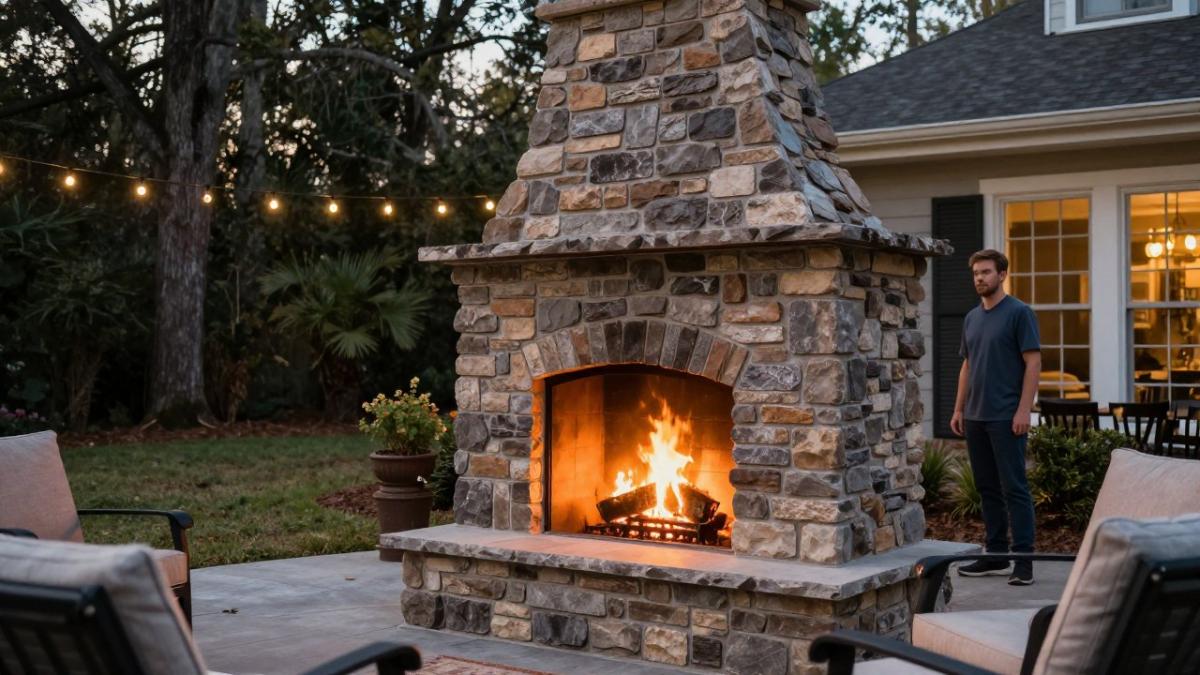
Patio and Outdoor Living Room Layouts
Corner placement saves floor space and keeps seating close to the heat. A freestanding unit works better when you want the fireplace to act as a centerpiece you can see from every chair. You can browse completed outdoor masonry projects for layout ideas.
- Corner placement: Fits small patios and frees up the middle of the space
- Freestanding centerpiece: Works best for large outdoor living rooms
- Built into a wall: Blends with a house or privacy fence
Modern Versus Traditional Designs
Modern designs use clean lines and smooth stone or large slabs. Traditional designs lean on rough-cut stone, arched openings, and a heavier surround. Stone veneer is a common way to get the look of solid stone at a lower cost, and Fire Pit Surplus's outdoor fireplace pricing guide notes that stone veneer adds $800 to $2,000 to the total.
Choosing a Site: Permits, Clearances, and Foundation
Site choice is where many DIY builds go wrong. A fireplace that looks great on a plan can fail inspection or sit on soil that shifts over time. This is also the stage most product and inspiration pages skip, so treat it as the real starting line.
Fire Clearances and Local Permit Checks
Clearance rules set how far the fireplace must sit from houses, fences, trees, and overhead structures.
A few practical points most homeowners miss:
- Chimney height: The IRC's 3-2-10 rule is the common benchmark, a chimney should extend at least 3 feet above the roof line where it penetrates and at least 2 feet higher than any roof surface within 10 feet. For a freestanding outdoor fireplace, the same logic applies to nearby structures and overhead obstructions.
- Hearth extension: The hearth must extend beyond the firebox opening. The IRC sets minimum hearth extension dimensions based on firebox size; confirm the exact figure with your inspector before you pour.
- Combustible clearances: Wood framing, siding, fencing, and decking need separation from the firebox and chimney. The required distance depends on the appliance and the assembly; a listed unit's label or the approved plans govern.
- Permits: Most jurisdictions require a permit for a permanent masonry structure with a firebox and flue. Ask specifically whether you need a building permit, a mechanical or fireplace permit, and a separate inspection for the footing before the pour.
National Fire Protection Association code guidance is a useful starting point for clearance standards, and your local building or fire department is the authority for the adopted version.
Watch out: A fireplace built to a model code but not to your jurisdiction's amendments can pass a neighbor's inspection and fail yours; always ask for the adopted code year and any local amendments in writing.
Foundation, Drainage, and Site Preparation
A stone fireplace is heavy, and the footing carries that load. A reinforced concrete footing sized to the design is the norm; the depth and width depend on the fireplace's footprint, the soil, and the frost depth where you live.
Site preparation follows a sequence:
- Call 811 before digging so buried utilities are marked. This is free and required in most states.
- Strip and compact the base in lifts, usually 6 to 8 inches at a time, so the subgrade is stable.
- Set the footing with reinforcing bar and let it cure fully before building on it.
- Slope the ground away from the structure at roughly 1 inch per foot for the first several feet so water runs off.
- Plan a drainage path, a French drain, gravel bed, or surface swale, so water never ponds against the base.
Poor drainage is one of the most common causes of cracking after a few seasons. Water that sits under a footing can soften soil, cause settlement, and open joints in the masonry above.
- Check the site for buried utilities before digging
- Compact the base in layers
- Set the footing below the frost line where it applies
- Slope the ground away from the structure
Watch out: A footing poured on uncompacted fill or on a slope without a drainage plan can show cracks over time, so prepare the subgrade before pouring concrete.
What Type of Stone Is Best for an Outdoor Fireplace?
Dense, weather-resistant stone generally holds up best outdoors, and stone that absorbs a lot of water can flake or crack after freeze-thaw cycles.
Ask a masonry contractor to check the stone's rating for freeze-thaw resistance before you buy. Mortar choice matters as much as stone choice for long-term durability.
Outdoor Stone Fireplace Kits: What Comes in the Box
Modular kits simplify construction by supplying pre-cut components. Stone Age Manufacturing's modular masonry fireplace product information describes its kits as designed to simplify building, and Fire Farm's outdoor fireplace kits notes they come in several shapes and sizes.
A kit still requires planning. Kit components do not decide whether your site meets clearance and permit rules, and they do not replace a sound foundation.
Solid Rock Brick offers stone work in Jackson for customers who want a custom build. Pricing depends on the design, materials, and site conditions, so contact us for a quote.
DIY Outdoor Stone Fireplace: Build Sequence and Materials
A DIY build follows a clear order: site prep, footing, firebox, stone walls, hearth, and finishing. Skipping a step usually means tearing work out later. The sequence below is the one most masons follow, with the checkpoints that keep the build inspectable and safe.
Tools and Materials List
A complete bill of materials depends on the fireplace's size, but the categories are consistent:
- Footing: concrete mix, reinforcing bar, form lumber, gravel base
- Firebox: firebrick or a listed firebox liner, refractory mortar, and a damper or throat assembly if the design calls for one
- Masonry: stone or veneer, masonry mortar (Type N or S depending on exposure), wall ties, and flashing
- Chimney: flue tile or a listed chimney system, chimney cap, and spark arrestor
- Hearth and finish: hearth stone or pavers, jointing tools, sealant rated for the stone
- Tools: masonry trowel, jointer, level, string line, masonry saw, mixing tub or mixer, wheelbarrow, and safety gear (gloves, eye protection, respirator for cutting stone)
Quantities are driven by the design. A common pattern is to order 5 to 10 percent extra stone for cuts and breakage, and to mix mortar in small batches so it does not set before you use it.
Build Steps and Common Mistakes
- Prepare the site: Confirm clearances and permits, call 811, and clear the area. Have the footing inspected before you pour if your jurisdiction requires it.
- Pour the footing: Set forms, place reinforcing bar, pour, and let it cure fully, typically several days, before building on it.
- Build the firebox: Use firebrick and refractory mortar rated for high heat. Size the opening so the firebox depth and chimney flue work together; a firebox that is too shallow or a flue that is too small will smoke.
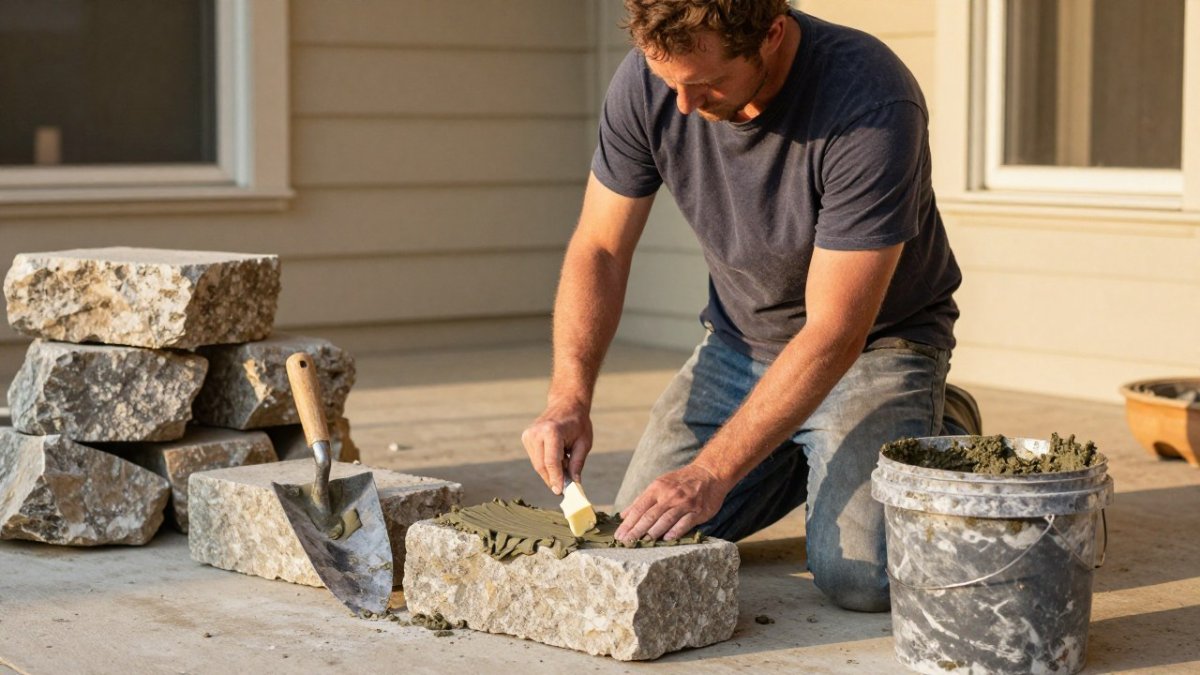
- Lay the stone walls: Work in courses, checking level and plumb as you go. Tie the veneer or stone to the backing with wall ties, and keep mortar joints consistent.
- Build the chimney and flue: Continue the flue up through the chimney, maintain the required clearance to combustibles, and cap it with a spark arrestor. Confirm the 3-2-10 height rule against nearby roofs and structures.
- Add the hearth and finish: Set the hearth stone, joint the masonry, and seal the stone where the manufacturer recommends it. Clean the surface before the mortar fully hardens.
Watch out: Mortar that sets before the stone is level is hard to correct, so dry-fit each course first. Other common mistakes include undersized footings, mortar used in the firebox instead of refractory material, a flue sized smaller than the firebox opening, and skipping the drainage plan.
Inspection and Curing Checkpoints
Most inspectors want to see the footing before it is covered and the flue or chimney before it is enclosed. Build those inspections into the schedule rather than discovering them after the stone is up. Keep the manufacturer's instructions for any listed firebox, damper, or chimney component on site, the inspector will often ask for them.
Safety, Ventilation, and Smoke Management
A fireplace is a fire source, so safety comes first. Keep the opening sized so smoke can draw up and out. Check that wind and nearby structures will not push smoke into living areas. Keep a fire extinguisher or water source close by, and never burn materials other than clean, dry wood.
Total Cost Variables and Maintenance Over Time
Total cost depends on the design, the stone, site preparation, permits, and whether you hire help. Stone veneer, custom shapes, and difficult site access all push the price up.
Plan for maintenance. Inspect joints each year, repoint loose mortar, and seal the stone where the manufacturer recommends it. Keep the firebox clean and check the flue or chimney before each season. Regular checks help a fireplace last for decades.
The article lists the main factors that move the price of an outdoor stone fireplace, along with the annual upkeep it recommends.
| Cost or upkeep item | Value or action | Note |
|---|---|---|
| National install range | $800 to $21,000 | Angi estimate; average near $3,000 |
| Stone veneer add-on | $800 to $2,000 | Fire Pit Surplus pricing guide |
| Price drivers | Design, stone, site prep, permits | Custom shapes and hard access raise cost |
| Joint inspection | Each year | Check for loose mortar |
| Repointing | As needed | Repair loose mortar |
| Firebox and flue check | Before each season | Keep firebox clean; inspect flue |
| Stone sealing | Per manufacturer | Follow recommended schedule |
Booking Your Outdoor Stone Fireplace With Solid Rock Brick
A well-built outdoor stone fireplace adds lasting value to a Jackson-area home. If you'd rather not manage the build yourself, our team can help with your masonry project. Contact Solid Rock Brick today to request a quote and talk through your project.
Frequently Asked Questions
What type of stone is best for an outdoor fireplace?
Dense, low-porosity natural stones such as granite, quartzite, and certain limestones hold up best to freeze-thaw cycles, rain, and heat. Porous stones absorb more moisture and can spall over time, so ask your contractor for stone rated for exterior use. Stone veneer is a common, lower-weight option. Pricing varies with quantity and site conditions, so request a written quote from Solid Rock Brick for current figures.
Are outdoor stone fireplace kits a good choice?
A kit does not remove the need to plan the build, verify site requirements, and meet local permit and clearance rules. Kits also do not replace a properly prepared foundation. Compare what each kit includes, such as firebox, flue components, and base pieces, before deciding whether a kit or a fully masonry build fits your project.
Does an outdoor stone fireplace need a chimney?
A wood-burning outdoor fireplace generally needs a flue or chimney to vent smoke safely away from the cooking and seating area. Some gas-fired designs use different venting approaches. Requirements depend on the appliance and local code, so confirm venting, clearances to combustible materials, and inspection requirements with your local building department before construction begins.