 how-to
7 Steps to Fix Cracked Concrete Pool Deck
Last Updated: October 30, 2026
Quick Summary
To fix a cracked concrete pool deck, diagnose the crack type first, then clean it thoroughly and fill it with a flexible elastomeric sealant rather than rigid cement. Seal the whole surface afterward and call a pro if cracks exceed 1/4 inch or keep returning.
- Hairline cracks under 1/8 inch wide are usually cosmetic and can be sealed yourself.
- Wait for a dry day and give the deck at least 24 hours without rain before filling.
- Let filler cure 24 to 48 hours before anyone walks on the deck.
- Reapply elastomeric sealer every 2 to 3 years to keep water out.
- Call a pro when a crack is wider than 1/4 inch or the slab has settled.
Table of Contents
- What You'll Need Before You Fix a Cracked Concrete Pool Deck
- Step 1: Diagnose the Crack Type and Severity
- Step 2: Clean and Prep the Crack for Repair
- Step 3: Choose the Right Concrete Crack Filler for Pool Deck Repairs
- Step 4: Apply the Filler and Level the Surface
- Step 5: Learn How to Seal Cracks in Concrete to Prevent Recurrence
- Step 6: Common Mistakes to Avoid on a Pool Deck Repair
- Step 7: Know When to Call a Masonry Professional
- Frequently Asked Questions
What You'll Need Before You Fix a Cracked Concrete Pool Deck
A cracked pool deck is more than an eyesore. It is a sign that water, soil movement, or age is working on the slab, and fixing it right the first time saves money. At Solid Rock Brick, we know that most failed repairs start with the wrong materials or a rushed prep job. Typical pool deck repairs run $750 to $2,500, according to EstimatorSuite's pool deck repair cost data, while major structural repairs can hit $3,000 to $10,800. That gap is why diagnosis matters. Below, we walk through the seven steps to fix a cracked concrete pool deck, from reading the crack to knowing when to stop and call a pro.
Here is what you need on hand before you start:
- Safety gear: safety glasses, nitrile gloves, knee pads
- Cleaning tools: stiff wire brush, shop vacuum, compressed air
- Repair materials: concrete crack filler for pool deck use, backer rod, sealant
- Application tools: caulk gun, putty knife, trowel, foam brush
- Prep supplies: painter's tape, plastic sheeting, rubbing alcohol
Step 1: Diagnose the Crack Type and Severity
Not every crack needs the same fix. A hairline crack is a narrow split under 1/8 inch wide that usually comes from surface shrinkage. A structural crack is wider, deeper, or accompanied by settling, and it often signals a bigger problem underneath. A single crack patch costs $150 to $375, per EstimatorSuite's repair pricing guide, so matching the repair to the crack saves real money.
Hairline Cracks in a Concrete Pool Deck
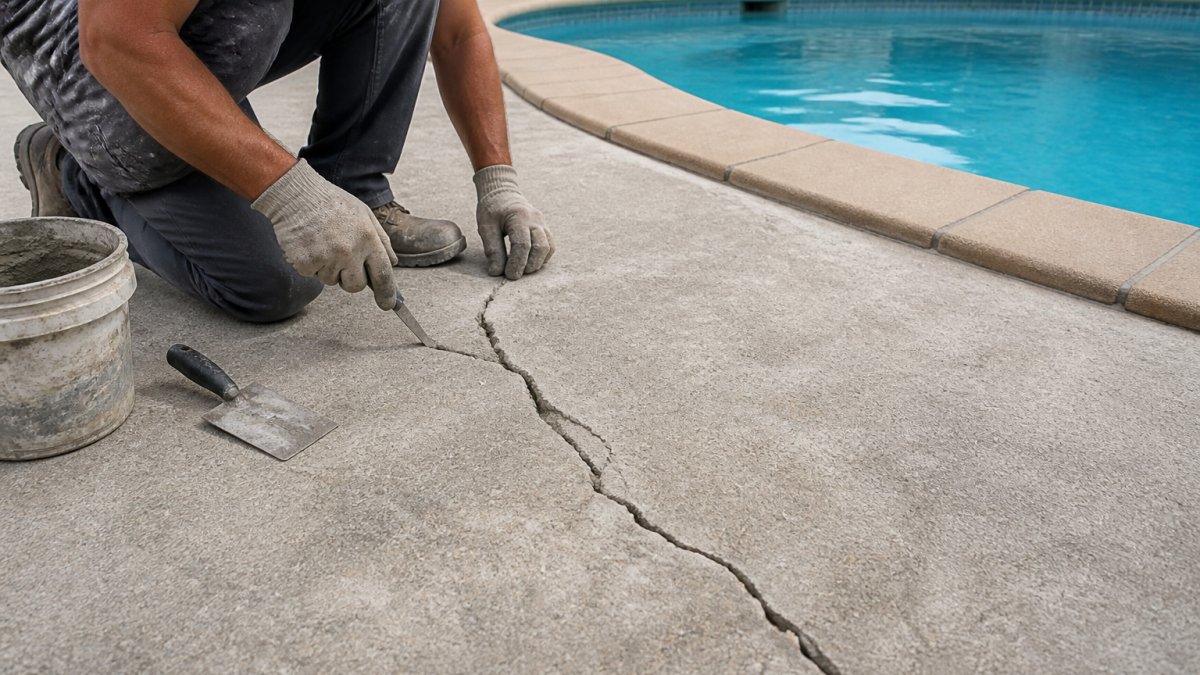
Hairline cracks in a concrete pool deck are thin surface splits that rarely threaten the slab. They let in moisture, though, and freeze-thaw cycles widen them over time. Seal hairline cracks early with a flexible filler and they stay cosmetic. Ignore them and they become structural.
Check these signs before you buy any material:
- Crack width under 1/8 inch: seal it yourself
- Crack wider than 1/4 inch: investigate the cause
- Cracks that reappear after patching: suspect slab movement
- Multiple cracks radiating from one point: likely settling
Step 2: Clean and Prep the Crack for Repair
Prep is where most DIY repairs fail. Dirt, algae, and loose concrete stop filler from bonding, and a weak bond means the patch pops out within a season. Start by removing all debris with a wire brush, then follow with a shop vacuum and compressed air. Wipe the edges with rubbing alcohol and let the surface dry fully.
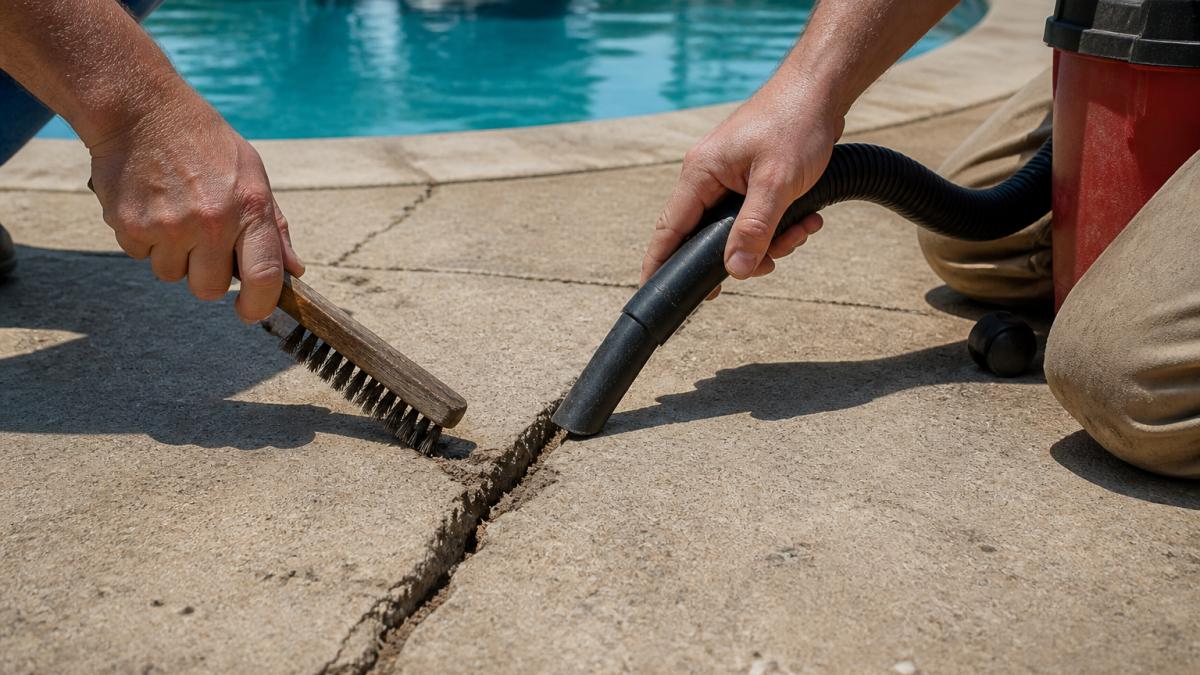
A common mistake is filling a damp crack. Moisture traps under the filler and pushes it out. Wait for a dry day and give the deck at least 24 hours without rain. Tape off the surrounding surface so excess filler does not stain the concrete.
Step 3: Choose the Right Concrete Crack Filler for Pool Deck Repairs
The right concrete crack filler for pool deck repairs is a flexible, elastomeric product, not rigid hydraulic cement. Pool decks move with temperature and soil shifts, and rigid fillers crack again fast. DIY sealant kits typically cost $90 to $225, according to AquaBond Adhesives' market pricing, while professional resurfacing runs $3 to $12 per square foot. Seeing finished work helps you judge what quality looks like, so browse our gallery before you decide between DIY and hiring out.
Use this quick guide to pick your filler:
| Crack Type | Best Filler | Why |
|---|---|---|
| Hairline (under 1/8 in) | Flexible acrylic sealant | Moves with the slab |
| Medium (1/8 to 1/4 in) | Polyurethane caulk | Strong bond, stays flexible |
| Wide or deep | Backer rod plus polyurethane | Fills depth, prevents sag |
| Recurring cracks | Elastomeric coating | Covers and flexes |
Step 4: Apply the Filler and Level the Surface
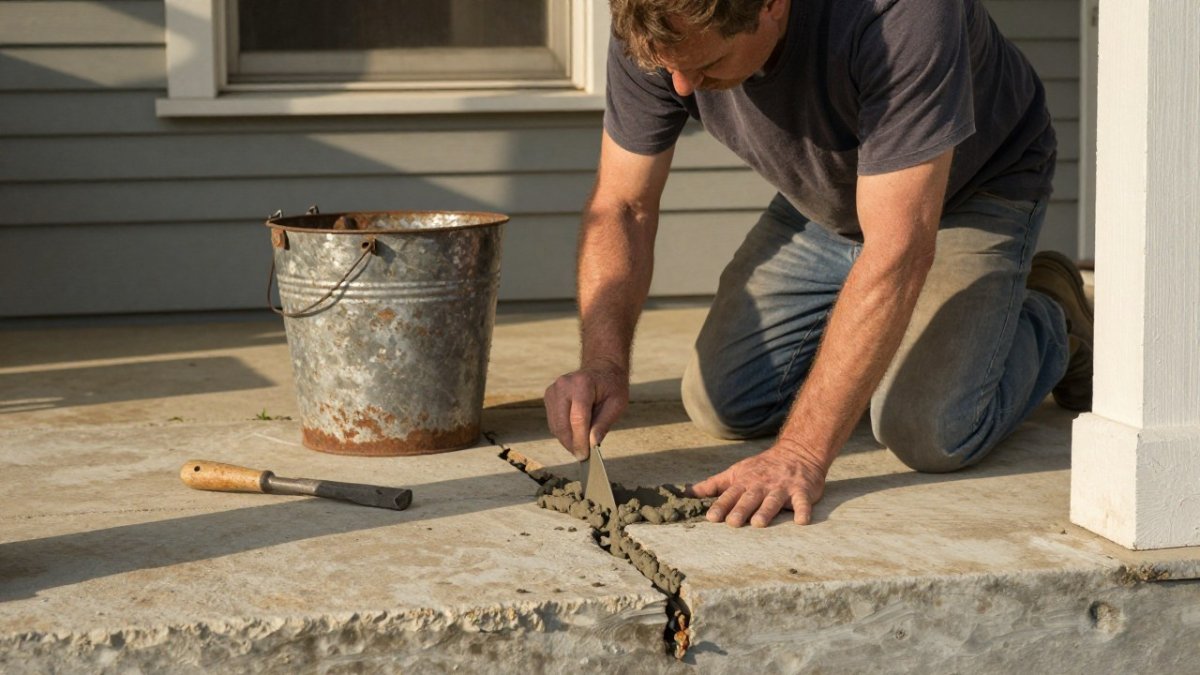
Application is straightforward once the prep is right. Push backer rod into deep cracks so the filler sits at the right depth, then apply the sealant with a caulk gun. Work in sections and keep steady pressure so the filler reaches the bottom of the crack.
Level the surface with a putty knife while the filler is still wet. Overfill slightly, then smooth it flush. Wipe excess immediately with a damp rag. Let the filler cure per the manufacturer's instructions, usually 24 to 48 hours, before anyone walks on the deck.
Watch out: filling a crack in direct sun on a hot day can cause the sealant to skin over before it bonds. Work in the morning or shade.
Step 5: Learn How to Seal Cracks in Concrete to Prevent Recurrence
Knowing how to seal cracks in concrete is the difference between a one-time patch and a lasting repair. Sealing means protecting the whole surface, not just the crack. A flexible topcoat keeps water out and lets the slab move without splitting again.
Follow these steps for a lasting seal:
- Clean the entire deck with a pressure washer on low setting
- Let the concrete dry for 48 hours
- Apply an elastomeric concrete sealer with a roller
- Coat edges and cracks twice for extra protection
- Reapply the sealer every 2 to 3 years
According to One Day Floor's coating guidance, rubber pool deck coatings move with the concrete and address the root cause of recurring cracks. That flexibility is what rigid patches lack.
Step 6: Common Mistakes to Avoid on a Pool Deck Repair
Most failed pool deck repairs trace back to a few repeat mistakes. Avoiding them saves you a second repair and the added cost that comes with it. Here is what we see most often:
- Skipping the cleaning step, so filler never bonds
- Using rigid cement on a slab that needs to flex
- Filling in wet or cold conditions, which weakens the bond
- Ignoring the cause, so the crack returns within months
- Overfilling without leveling, which leaves a trip hazard
One more: patching a crack without checking for slab movement. Some professionals argue that patching only treats the symptom, and that soil movement or slab instability needs a permanent fix, per One Day Floor's repair analysis. Slab leveling services average around $1,232, according to AquaBond Adhesives' cost data, and that investment stops the crack cycle.
Step 7: Know When to Call a Masonry Professional
Some cracks are beyond a tube of sealant. Call a pro when the crack is wider than 1/4 inch, when the slab has settled, or when cracks keep returning after repair. Those signs point to structural movement that surface filler cannot fix.
A masonry professional can assess the slab, recommend leveling or resurfacing, and repair the deck so it holds. At Solid Rock Brick, we handle concrete repair projects for residential and commercial clients in Jackson, MS, and the surrounding areas, backed by 16 years of experience. If your repair needs more than a patch, review our masonry services or contact our team to request a quote.
Frequently Asked Questions
How do you fix cracks in a concrete pool deck?
Start by diagnosing the crack: hairline cracks under 1/8 inch can be sealed with a flexible caulk, while wider cracks need a concrete crack filler for pool deck use. Clean the crack thoroughly, apply the filler, level it, then seal the surface once cured. Professional repair pricing depends on the size and scope of the damage, so contact us for a quote. Structural cracks or slab movement require a professional evaluation.
Can you repair hairline cracks in a concrete pool deck?
Yes. Hairline cracks in a concrete pool deck are usually cosmetic and can be sealed with a flexible, elastomeric sealant that moves with the concrete. Clean the crack, apply the sealant, and let it cure. Sealing hairline cracks early stops water intrusion and freeze-thaw damage. If hairline cracks keep reappearing in the same spot, the slab may be moving and needs a professional look.
Should you fill or seal cracks in a pool deck?
Both, in order. Fill wider cracks with a concrete crack filler for pool deck repairs, then seal the entire surface to keep water out. Sealing alone will not bridge a gap wider than about 1/8 inch. Filling first and sealing second gives the longest-lasting result.
When should a cracked pool deck be repaired by a professional?
Call a professional when cracks are wider than 1/4 inch, the slab has settled or heaved, or cracks keep returning after repair. A masonry contractor can tell you whether patching will hold or replacement is the better call.
A recurring crack is a signal, not a nuisance. If your pool deck keeps splitting after every patch, the slab underneath needs attention, and that is work best handled with the right tools and experience. Solid Rock Brick brings 16 years of masonry experience, dedicated craftsmanship, and a commitment to 100% customer satisfaction to every repair. Get started with Solid Rock Brick and fix your cracked concrete pool deck for good.