 ultimate-guide
Best Materials for Retaining Walls: A Complete Guide
Table of Contents
- Retaining Wall Materials Compared: What You Need to Know
- Durability and Lifespan by Material Type
- Retaining Wall Drainage Gravel and Water Management
- Retaining Wall Material Cost: Budget Considerations
- Retaining Wall Construction Tools and Installation Requirements
- Engineering, Height, and Soil Conditions
- Permits, Codes, and When to Hire a Professional
- Frequently Asked Questions
Last Updated: October 11, 2026
Retaining Wall Materials Compared: What You Need to Know
Choosing the best materials for retaining walls determines whether your structure lasts decades or requires costly repairs within years. The right material depends on your soil conditions, budget, climate, and aesthetic goals.
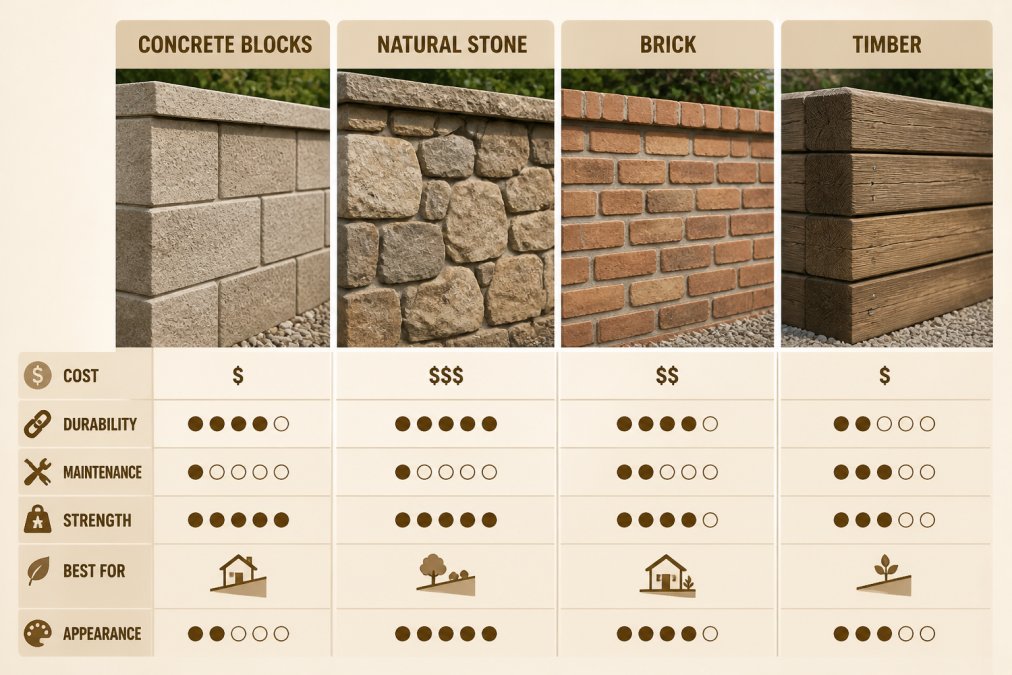
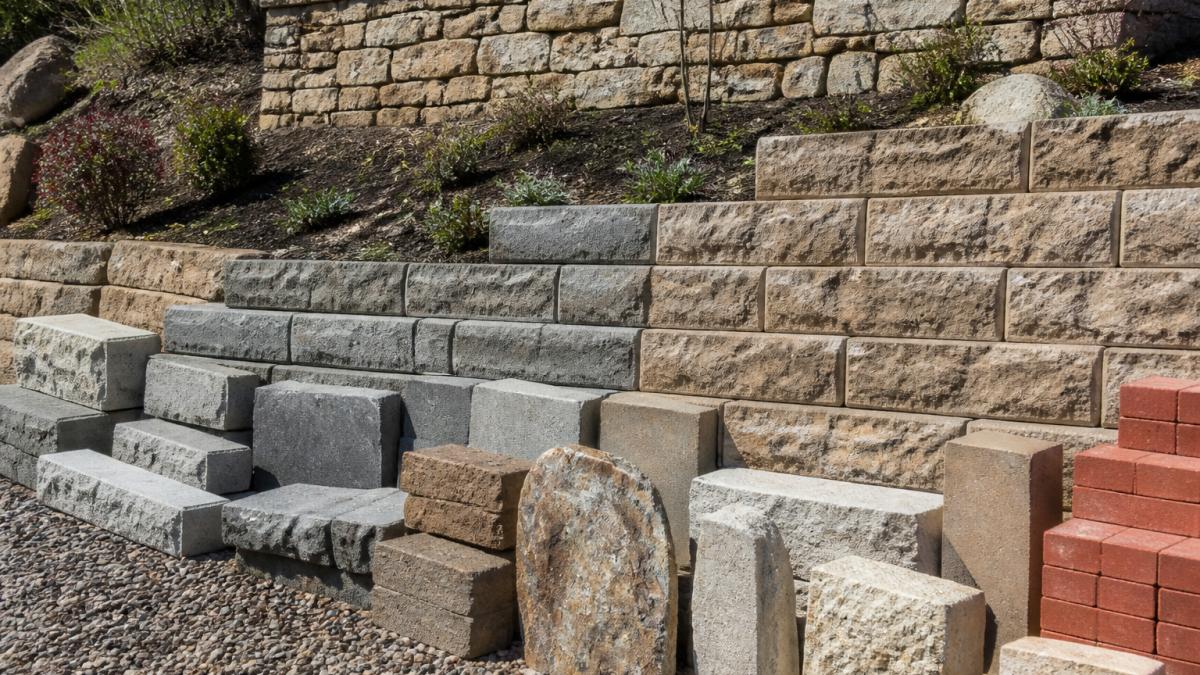
The best materials for retaining walls fall into three primary categories: concrete and segmental blocks, natural stone and brick, and timber or treated wood. Each has distinct strengths and limitations that make it suitable for different scenarios.
Concrete and Segmental Blocks
Segmental concrete blocks interlock for stability without mortar and install faster than poured concrete, which requires formwork and professional expertise but delivers superior load-bearing capacity for taller walls.
Concrete blocks perform well on steep slopes and offer aesthetic variants while requiring minimal maintenance beyond occasional sealing.
Concrete blocks can crack under freeze-thaw cycles if water infiltrates improperly. Poured concrete is permanent, mistakes are expensive to correct. Both require proper drainage to prevent hydrostatic pressure.
Natural Stone and Brick
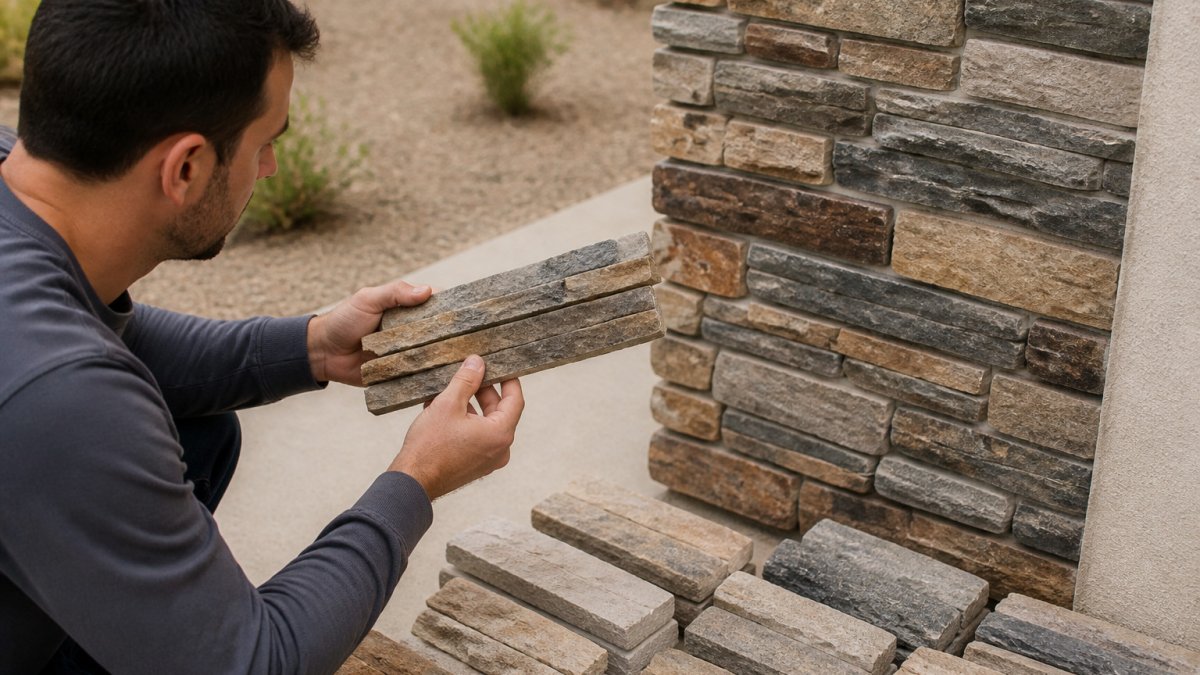
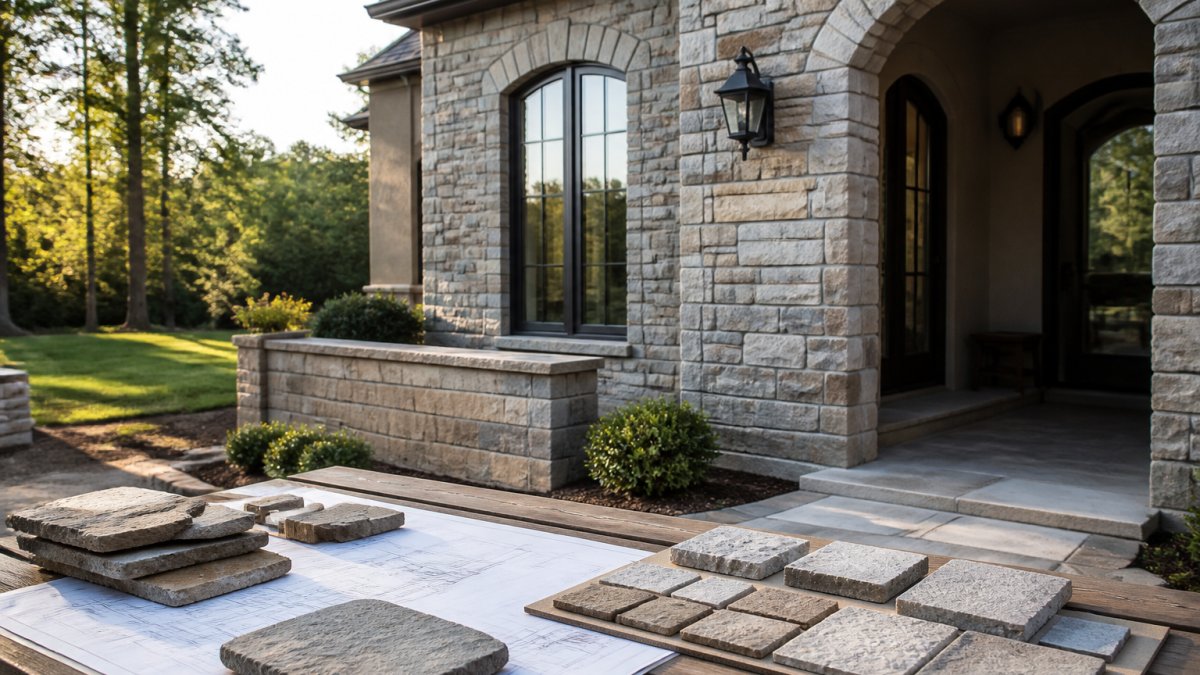
Natural stone and decorative brick deliver timeless aesthetic appeal and enhance property value, suiting slopes where appearance matters as much as function.
Brick offers precision and uniformity; natural stone provides organic texture. Both work well in moderate climates, with slate and sandstone resisting weathering better than softer stones.
Stone and brick require skilled installation and periodic repointing. Natural stone can spall in harsh climates. These materials cost more upfront but age beautifully with minimal intervention.
Durability and Lifespan by Material Type
Properly installed poured concrete lasts 50-75 years, segmental blocks 40-60 years, brick 75-100+ years, and natural stone a century or more.
Timber has the shortest lifespan: pressure-treated pine lasts 15-20 years, hardwood 25-30 years. Humid climates accelerate deterioration.
Maintenance intensity correlates with durability. Neglect any material, and lifespan drops sharply.
Retaining Wall Drainage Gravel and Water Management
Water is the enemy of every retaining wall. Drainage gravel allows water to percolate downward instead of building hydrostatic pressure that pushes the wall outward.
Install drainage gravel at least 12 inches thick behind the wall with perforated pipe at the base sloped to daylight. Most wall failures trace to inadequate drainage, not material weakness.
Proper drainage extends the lifespan of any material by years or decades.
Retaining Wall Material Cost: Budget Considerations
The best materials for retaining walls balance initial investment against 50-year total cost of ownership, including installation labor and maintenance.
Material Cost Ranges (per square foot)
Installation Labor
- Segmental blocks: $10-$20/sq ft. DIY-friendly for walls under 3 feet.
- Poured concrete: $15-$30/sq ft. Requires professional expertise.
- Natural stone: $25-$50+/sq ft. Most labor-intensive.
- Brick: $15-$35/sq ft. Requires masonry experience.
- Timber: $5-$15/sq ft. Most DIY-friendly.
Lifecycle Cost
Maintenance and Repair Costs
- Concrete: Sealing every 3-5 years ($200-$400). Crack repair: $300-$1,000.
- Stone and brick: Repointing every 20-30 years ($500-$2,000). Spall repair: $100-$500.
- Timber: Sealing every 2-3 years ($300-$800). Rot repair: $200-$1,000 per section.
Budget under $2,500 and willing to replace in 15-20 years? Timber works. Staying 30+ years with minimal maintenance? Choose segmental blocks or concrete. Prioritizing appearance and permanence? Natural stone's higher upfront cost is offset by century-scale durability.
Retaining Wall Construction Tools and Installation Requirements
Segmental Concrete Blocks
Segmental blocks are the most DIY-friendly material for walls under 3 feet. Required tools: rubber mallet, level, string line, shovel, and hand tamper or plate compactor.
Poured Concrete
Poured concrete demands professional expertise. Build sturdy formwork, set drainage pipe and gravel, pour concrete (3,000-4,000 PSI), vibrate, and cure 7 days before backfill. Not recommended for DIY walls over 3 feet; formwork errors cause structural failure.
Natural Stone and Brick: Skilled Labor, Slowest Installation
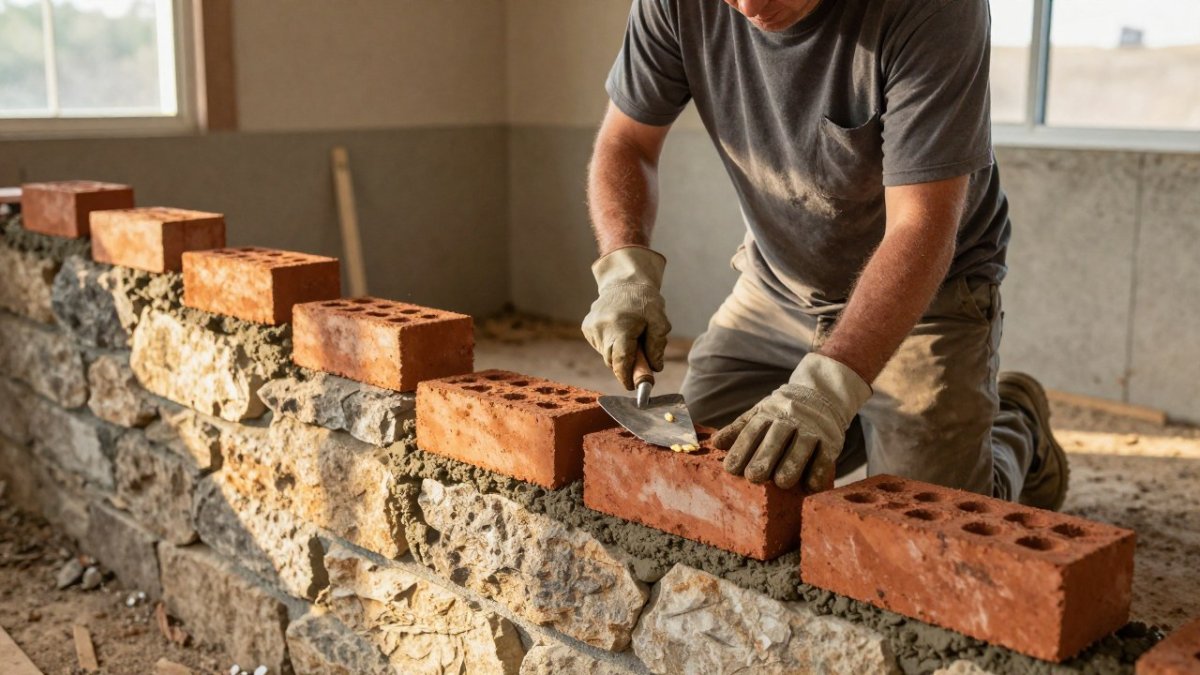
Stone and brick installation requires a mason's skill set. Tools include a mason's hammer, cold chisels, a level, a string line, a mortar mixing tub or mixer, a trowel, and a grout bag for pointing.
Process: Prepare a compacted gravel base. Lay the first course in a mortar bed (typically 4 parts sand, 1 part Portland cement, plus lime for workability). Each stone is set, tapped level, and checked against the string line.
DIY feasibility: Not recommended unless you have masonry experience. Stone fitting, mortar consistency, and joint finishing require skill. Poorly mortared walls fail as joints crack and water infiltrates. Hire a mason.
Time estimate: A skilled mason installs 10-20 square feet per day, depending on stone size and complexity. A 4-foot-tall, 20-foot-long wall takes 4-8 days.
Treated Timber: Simple Tools, DIY-Friendly
Timber is the most DIY-accessible material. Required tools are basic: a circular saw, a power drill, a level, a shovel, and fasteners (galvanized or stainless steel bolts and brackets).
Process: Excavate and level the base. Set pressure-treated posts (typically 6×6 or 8×8 lumber) vertically, spaced 4-6 feet apart. Backfill around posts with compacted soil.
DIY feasibility: Walls under 3 feet are very DIY-friendly. Walls 3-4 feet are manageable with care. Walls over 4 feet require engineering and professional installation.
Time estimate: A homeowner can build 15-25 square feet per day. A 4-foot-tall, 20-foot-long wall takes 3-5 days.
Critical Installation Details All Materials Require
Regardless of material, three details determine success or failure:
-
Base preparation: Excavate to undisturbed soil. Remove organic material, roots, and debris. Compact the base with a hand tamper or plate compactor until it's firm and level. Poor base preparation causes settlement and wall failure within 2-5 years.
-
Drainage gravel and pipe: Install at least 12 inches of coarse gravel (¾-1½ inch stone, not sand or soil) behind the wall. Place a perforated drainage pipe at the base, sloped to daylight or a drainage outlet. This prevents hydrostatic pressure buildup, the leading cause of wall failure. Skipping drainage is the most common and costly mistake.
-
Backfill compaction: Backfill behind the wall with drainage gravel or free-draining soil, not clay or fine soil. Compact in 6-inch lifts with a hand tamper or plate compactor. Proper compaction prevents settling and reduces pressure on the wall.
When to Hire Professionals
Hire professionals if:
- The wall is taller than 4 feet
- The slope exceeds 1:1 (45 degrees)
- The wall borders a property line or sits near a structure
- Soil is clay-heavy or poorly draining
- Your region experiences hard freeze-thaw cycles
- You lack experience with the material
Professional installation costs more but prevents catastrophic failure. At Solid Rock Brick, we handle base preparation, drainage design, material selection, and installation with expertise built over 16 years, ensuring your wall lasts decades.
Engineering, Height, and Soil Conditions
Wall height and soil type determine which materials work. Short walls under 4 feet on stable soil can use almost any material. Tall walls, 8 feet or higher, require engineered design and stronger materials. Segmental concrete blocks and poured concrete handle height better than stone or timber.
Soil composition matters. Clay-heavy soil exerts more pressure on walls than sandy soil. Sloping ground amplifies pressure. If your slope exceeds 1:1 (45 degrees), professional engineering is essential. Soil testing reveals bearing capacity and drainage characteristics.
Freeze-thaw cycles in cold climates stress materials. Concrete and brick withstand cycles better than timber. Stone selection matters, dense slate outlasts softer sandstone. If your region experiences hard freezes, avoid timber and choose concrete, brick, or quality stone.
Permits, Codes, and When to Hire a Professional
Most jurisdictions require permits for retaining walls over 4 feet tall. Local building codes specify minimum setbacks, drainage requirements, and structural standards. Some areas demand engineer-stamped designs for walls over 6 feet. Ignoring permits risks fines and liability.
Professional design ensures compliance. Engineers calculate soil pressure, specify materials, and detail drainage. For walls on property lines or near structures, professional design is non-negotiable.
Hire professionals if your wall is taller than 4 feet, sits on a steep slope, or borders another property. The cost of professional installation and design is insurance against failure. At Solid Rock Brick, we handle permits, engineering coordination, and installation with expertise built over 16 years serving Jackson and the surrounding areas.
Building a retaining wall that lasts requires choosing materials suited to your specific conditions. Concrete and segmental blocks offer durability and strength. Natural stone and brick deliver beauty and longevity. Timber costs less upfront but demands maintenance and replacement sooner. The best materials for retaining walls balance your budget, climate, soil conditions, and aesthetic vision.
Solid Rock Brick specializes in high-quality stone work, brick work, and concrete installations that enhance property appearance while delivering structural reliability. Whether you need residential retaining walls or commercial masonry features, our team brings 16 years of experience and commitment to 100% customer satisfaction. Contact us for a consultation on your retaining wall project.
Frequently Asked Questions
Which retaining wall material lasts the longest?
Natural stone and properly sealed brick typically last 50+ years with minimal maintenance. Poured concrete and segmental concrete blocks last 30-40 years. Treated timber lasts 15-20 years depending on climate and drainage. Stone's longevity makes it ideal for structural walls on slopes where failure carries real risk. Lifespan also depends on drainage quality and regional freeze-thaw cycles.
What fill should you use behind a retaining wall?
Retaining wall drainage gravel, typically 3/4-inch crushed stone or pea gravel, is essential behind the wall to manage water pressure and prevent soil saturation. Layer it 12-18 inches deep, then backfill with compacted soil. Without proper drainage gravel, water accumulates behind the wall, increasing hydrostatic pressure and risking structural failure. For walls over 3 feet tall, a perforated drain pipe at the base adds extra protection against water damage.
What is the most affordable material for a retaining wall?
Treated timber and concrete blocks are often considered budget-friendly options for residential projects. Timber typically requires more maintenance and has a shorter lifespan (15-20 years). Concrete blocks can offer better durability. Natural stone and brick often involve a higher investment but can provide superior aesthetics and longer lifespans. Total cost depends on wall height, soil conditions, and whether professional installation is needed.
Can I build a retaining wall myself?
Walls under 3-4 feet tall with stable soil may be suitable for DIY, but structural walls on slopes require engineering and professional installation. Building permits apply to most residential retaining walls, and code violations can result in fines or forced removal. Poor drainage or inadequate compaction causes costly failures. Hiring a professional ensures the wall meets local codes, handles soil conditions correctly, and includes proper drainage, protecting your property from liability and structural damage.
What tools do you need to build a retaining wall?
Essential retaining wall construction tools include a level, shovel, wheelbarrow, tamper (hand or power), measuring tape, and safety equipment (gloves, eye protection). For block or stone walls, you'll need a rubber mallet and possibly a masonry saw. Timber walls require a circular saw and drill. Proper drainage requires a perforated drain pipe and gravel. Larger projects benefit from a mini excavator or skid-steer loader for grading and compacting. Renting heavy equipment is often more cost-effective than purchasing.
Does a retaining wall need drainage gravel behind it?
Yes. Retaining wall drainage gravel is critical for any wall over 2 feet tall. It prevents water from pooling behind the wall, which increases hydrostatic pressure and causes structural failure, cracking, or tilting. Install 12-18 inches of 3/4-inch crushed stone directly against the back of the wall, then backfill with compacted soil. In areas with heavy rainfall or poor natural drainage, add a perforated drain pipe at the base to direct water away from the foundation.
Is concrete block or natural stone better for a retaining wall?
Concrete blocks are affordable, uniform, and easier to install, ideal for budget-conscious projects and DIY work. Natural stone offers superior aesthetics, longer lifespan (50+ years), and better performance on steep slopes due to weight and interlocking strength. Stone is more expensive and requires skilled installation. Choose concrete blocks for functional, low-visibility walls; choose stone for visible, structural, or long-term investments where durability and appearance matter.