 comparison
Average Cost to Replace Concrete Steps: 2026 Guide
Table of Contents
- Average Cost to Replace Concrete Steps: A 2026 Pricing Breakdown
- Concrete Removal Cost: Demolition, Disposal, and Site Prep
- Poured Concrete Steps Cost: Materials, Labor, and Reinforcement
- Precast Concrete Steps Cost: Faster Install, Different Price Profile
- Cost to Repair Concrete Steps vs Full Replacement
- Worked Estimates for Common Stair Configurations
- How to Compare Contractor Quotes and Avoid Scope Surprises
- Timeline, Access, and Curing: What to Expect After Replacement
- Frequently Asked Questions
Last Updated: October 9, 2026
Average Cost to Replace Concrete Steps: A 2026 Pricing Breakdown
The average cost to replace concrete steps depends on far more than the number of steps in front of you. It reflects demolition, disposal, forming, reinforcement, labor, and finish, and those inputs swing widely from one property to the next. At Solid Rock Brick, we have handled structural concrete repairs across the Jackson area for 16 years, and the honest answer is that no two stair replacements price the same. Below, we break down what actually drives the number, how repair compares with replacement, and how to read a contractor's quote without getting blindsided.
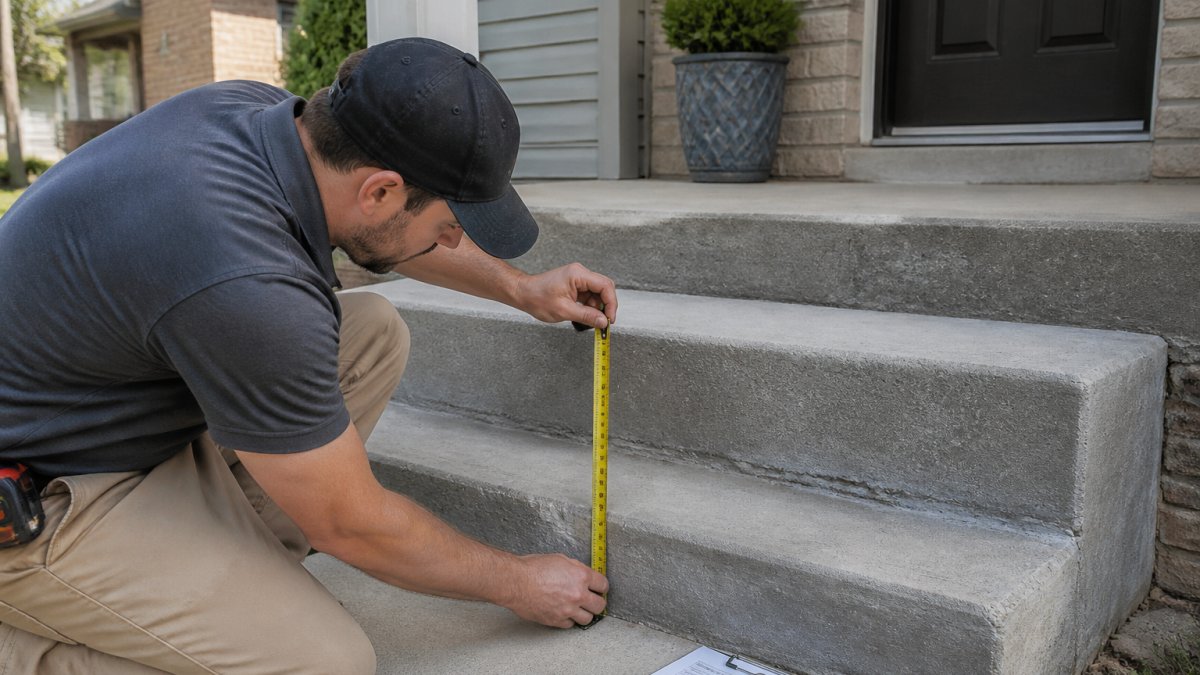
Replacement cost is a function of scope, not a flat rate. Two homes with identical step counts can land in very different price ranges once you factor in access, soil conditions, and whether the existing concrete comes out cleanly or fights you the whole way.
What Drives the Total Project Cost
Seven variables move the price more than anything else:
- Number of steps and total rise - each step adds material, forming, and labor
- Step width and depth - wider treads mean more cubic yards of concrete
- Demolition difficulty - reinforced or thick existing concrete costs more to break out
- Site access - tight side yards or steep grades slow removal and delivery
- Reinforcement - rebar or wire mesh adds material and time
- Finish - a broom finish is standard; stamped or exposed aggregate costs more
- Regional labor rates - pricing varies by market and season
Because these factors stack, the only reliable way to price a project is an on-site estimate. We tell every customer the same thing: a phone quote is a guess, and a good contractor will say so.
Concrete Removal Cost: Demolition, Disposal, and Site Prep
Concrete removal cost is often the line item homeowners underestimate most. Breaking out old stairs is physical, equipment-heavy work, and the debris has to go somewhere.
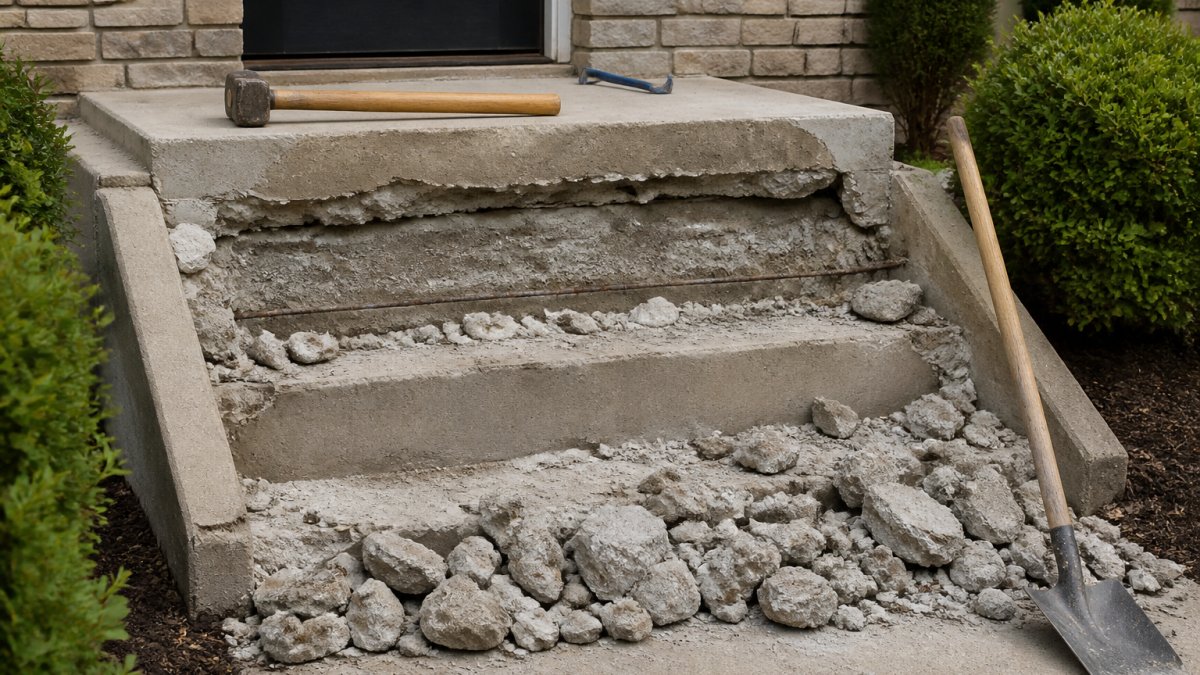
Demolition involves pneumatic breakers, saw-cutting where the stairs meet a walkway or landing, and hand work near finished surfaces. Disposal adds dumpster rental, hauling, and landfill fees, which fluctuate with local tipping charges. Site prep follows: grading the base, compacting soil, and setting forms so the new structure sits level and drains away from the house.
If the old stairs tie into a driveway or foundation, removal gets trickier. A common mistake is assuming the whole slab comes out in one piece. It rarely does, and a quote that doesn't account for careful edge cutting is a quote that will grow later.
Poured Concrete Steps Cost: Materials, Labor, and Reinforcement
Poured concrete steps cost reflects a fully custom build, and the most useful way to understand the number is to see it broken into the line items a contractor actually prices. Most guides give you a single per-step figure and stop. Here is the transparent breakdown instead.
A poured stair replacement quote is built from eight cost buckets. Not every job includes all eight, but a complete quote should address each one:
- Demolition - breaking out the existing steps with pneumatic breakers and saw-cutting where they meet a walkway, landing, or foundation.
- Disposal - dumpster rental, hauling, and landfill tipping fees. Tipping charges vary by market and move with local rates, so this line is rarely fixed.
- Site preparation - excavating to the right depth, grading, and compacting the base so the new structure does not settle.
- Forming - building the wooden molds for each riser and tread. This is the most labor-intensive stage and the one that separates a straight run from a curved or wrap-around entrance.
- Reinforcement - rebar or wire mesh placed inside the forms. Skipping it saves money up front and costs far more later.
- Concrete materials - the mix itself, plus any admixtures for freeze-thaw resistance or faster curing.
- Labor - the largest single share on most poured jobs, because forming and finishing stairs is skilled, time-consuming work.
- Finishing - broom finish is the standard; stamped, exposed aggregate, or colored finishes add material and time.
Because labor and forming dominate, the shape of the stair matters more than the volume of concrete. A straight run of standard steps is straightforward. A curved or wrap-around entrance takes dramatically longer to form, and that time shows up in the labor line, not the material line.
Poured-in-place concrete also lets you match a landing to an existing walkway and control the rise-and-run ratio for comfortable, code-friendly footing. The trade-off is curing time and the fact that the work happens entirely on your property, so access and weather matter.
When you compare poured quotes, compare the line items, not the totals. A quote that omits reinforcement, disposal, or base compaction is not cheaper. It is incomplete, and those costs reappear as change orders once the crew is on site.
Precast Concrete Steps Cost: Faster Install, Different Price Profile
Precast concrete steps cost tends to follow a different curve than poured stairs. The units are manufactured off site, delivered, and set with a crane or truck-mounted boom, which cuts on-site labor and curing time.
That speed is the main draw. If you need a residential entrance or deck entrance back in service quickly, precast can be the faster path. The catch is fit. Precast comes in set sizes, so it works best when a standard dimension matches your opening. Custom widths or unusual rises may not be available off the shelf, and you may still need a poured landing or footing to receive the units.
Access drives the price here more than materials. A crane needs room to set the steps, so a tight lot or an obstruction over the drop point can add cost or rule precast out entirely.
| Option | Best For | On-Site Time | Customization |
|---|---|---|---|
| Poured-in-place | Custom dimensions, curves, matched finishes | Longer (forming + curing) | High |
| Precast | Standard sizes, fast turnaround | Short (delivery + set) | Low to moderate |
| Repair/resurface | Sound structure, surface wear only | Short | N/A |
Cost to Repair Concrete Steps vs Full Replacement
The cost to repair concrete steps is almost always lower than replacement, but only when the structure underneath is sound. This is the decision that matters most, and it's where we see homeowners overspend in both directions.
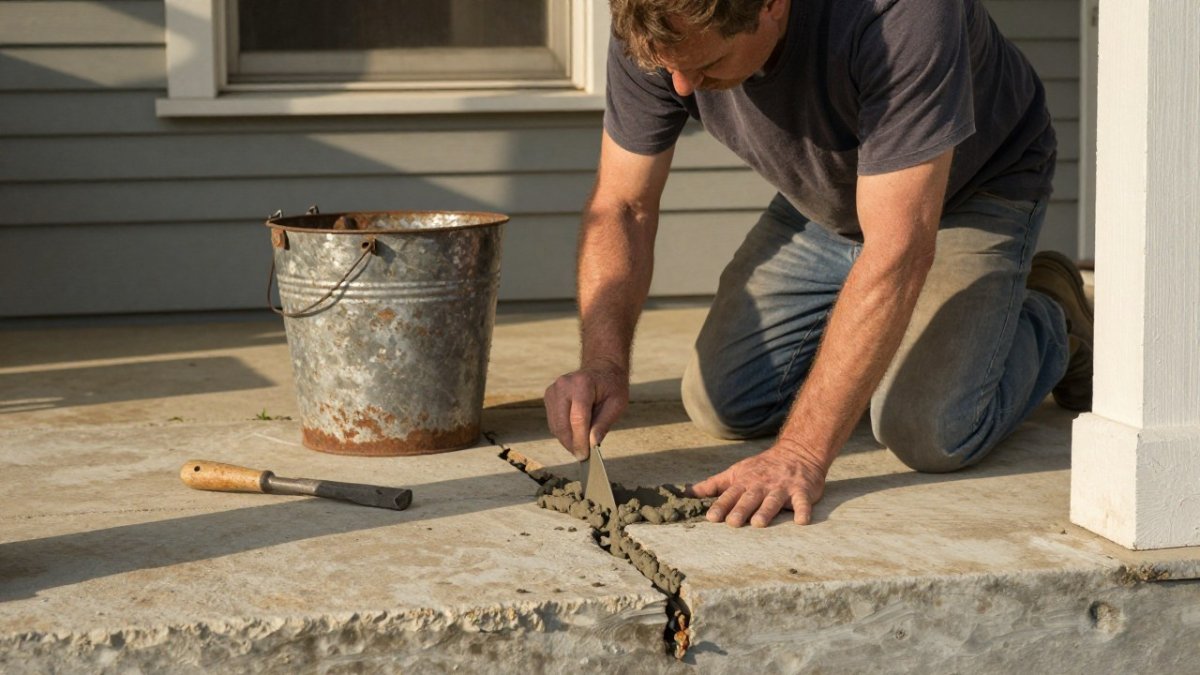
Repair makes sense when the damage is surface-level: spalling, a chipped nosing, or a single cracked tread with no movement. Resurfacing can restore appearance and buy years of service at a fraction of replacement. Replacement is the right call when steps have settled, pulled away from the house, or show structural cracking that keeps returning. Patching a failing structure just delays the inevitable and costs more in the long run.
Here's the like-for-like comparison most guides skip:
| Approach | What It Fixes | Relative Cost | Lifespan Expectation |
|---|---|---|---|
| Patching | Isolated chips and cracks | Lowest | Short-term |
| Resurfacing | Surface wear, cosmetic damage | Moderate | Medium-term |
| Full replacement | Settlement, structural failure | Highest | Long-term |
Worked Estimates for Common Stair Configurations
Exact pricing requires a site visit, but the configuration itself tells you a lot about scope. Most guides give you a broad per-step range and leave it there.
Three-step front entry, standard width. The most common residential job. Moderate demolition, straightforward forming, standard broom finish. This is the baseline against which everything else scales.
Four to six steps with a landing. The landing adds forming and material, and it is often where the old structure ties into a walkway, so removal takes longer and edge cutting is more delicate.
Wide or curved entrance steps. Custom forming drives labor up sharply. Curves and non-standard widths mean more time, more form lumber, and more skill.
Steps on a slope or tight access. Removal and delivery slow down, equipment may not fit, and everything takes longer. Access is the hidden cost driver.
Precast versus poured for the same configuration. Precast can cut on-site time dramatically because the units arrive finished and are set with a crane or boom. The catch is fit.
For any of these, the honest move is to get a written, itemized estimate. Pricing depends on your specific site, so we quote after we see it, not before.
How to Compare Contractor Quotes and Avoid Scope Surprises
Comparing quotes is where homeowners either protect themselves or set up a dispute. The lowest number is rarely the cheapest job.
Read every quote for what's included, not just the total:
- Is demolition and disposal listed separately, or bundled vaguely?
- Is reinforcement (rebar or mesh) specified, or left out to lower the price?
- Is the finish named (broom, stamped, exposed aggregate)?
- Is the base prep and compaction described?
- Are permits and code compliance addressed?
- Is the timeline and curing plan stated in writing?
A quote missing reinforcement or disposal isn't cheaper. It's incomplete, and those costs reappear as change orders. Ask each contractor to walk you through their scope line by line.
Timeline, Access, and Curing: What to Expect After Replacement
Timeline depends on the method. Precast steps can be set in a day once units arrive, while poured-in-place work spans forming, pouring, and curing.
Curing is the part people rush. Concrete needs time to reach strength before it takes foot traffic, and pushing it too soon causes the exact cracking you paid to eliminate. Your contractor should tell you when the steps are safe to use and when they're fully cured, and those are two different dates.
Access shapes the schedule from the start. A crane for precast needs clearance. A poured job needs room for a mixer and a path for wheelbarrows. On a tight lot, plan for extra time.
One more thing worth planning: drainage. New steps should shed water away from the foundation, and a landing that traps water will undermine the whole structure over time. Ask how the finished grade directs runoff before the crew leaves.
Replacing concrete steps is a structural decision, not just a cosmetic one, and the price you pay should match the scope you actually need. At Solid Rock Brick, we bring 16 years of experience to every project, from custom stone and brick work to concrete installation and structural repair.
Frequently Asked Questions
How much does it cost to replace concrete steps?
The average cost to replace concrete steps depends on the number of steps, the material, and whether removal is needed. Poured concrete steps cost more than precast because they are built on site with formwork and reinforcement. Removal adds to the total. Get a written estimate from a licensed contractor, since pricing varies by project scope and region.
Is it cheaper to repair or replace concrete steps?
Repair is usually cheaper when damage is limited to surface cracks, a chipped edge, or one loose step. Full replacement makes more sense when the structure has shifted, multiple steps are crumbling, or the stair no longer meets safety and code requirements. A contractor can confirm whether repair or replacement is the better long-term value.
Are precast concrete steps cheaper than poured-in-place steps?
Precast concrete steps are often less expensive up front because they are manufactured off site and installed quickly, cutting labor hours. Poured-in-place steps cost more because of formwork, reinforcement, and curing time, but they allow full customization of dimensions and finishes. The right choice depends on your stair dimensions and how soon you need the steps usable.
How long does it take to replace concrete steps?
A typical residential replacement takes one to three days of on-site work, depending on removal and site prep. Poured concrete then needs several days to cure before you can walk on it, and longer before heavy loads. Precast steps can be set and used much sooner. Ask your contractor for a schedule that includes cure time before you plan to use the steps.